Week 14 brought substantive coverage across browser engine development, web standards contributions, and infrastructure tooling. The WebKit team, in collaboration… Compiled for immediate developer deployment.
calendar_todaysummarizeWeek 14-2026
article
TAG: POLICYREAD_TIME: 26_MIN
The Web Is An Antitrust Wedge
Alex Russell argues that capable browsers and PWAs are the most powerful—and systematically suppressed—tool for breaking open mobile app-store monopolies. Apple deliberately withholds APIs from competing browser engines that would unlock home-screen web apps, push notifications, and in-app link handling, making DMA compliance a legal fiction. Regulators in the EU, UK, and Japan are squandering rare enforcement powers by focusing on alt stores instead of browser engine choice—the only ecosystem large enough to discipline iOS and Android without a cold-start problem. Because browsers synchronize identity and payment across OSes and feature near-zero switching costs, unleashing real browser competition would erode both the App Store tax and proprietary API lock-in simultaneously. The tech press reinforces this blind spot by accepting the duopolists' framing of mobile competition as a native-app story.
WebAssembly for Web Developers: Getting Started with Wasm in 2026
WebAssembly has matured into a practical production tool in 2026, offering 1.5x to 20x speed improvements over JavaScript for compute-heavy tasks such as image processing, physics simulation, and machine learning inference. Real-world benchmarks show 4K image processing dropping from 180ms in JavaScript to 22ms with Rust-to-Wasm, and further to 8ms with SIMD instructions. Rust with wasm-pack and wasm-bindgen remains the primary toolchain, while AssemblyScript lowers the barrier for TypeScript developers. Beyond the browser, WASI Preview 2 enables Wasm modules to run on edge platforms—Cloudflare Workers, Akamai EdgeWorkers—with cold starts as low as 1–5ms and memory footprints around 1MB per module versus 10MB for containers. WasmGC, now stable in Chrome 119+, Firefox 120+, and Safari 18.2+, enables Kotlin, Dart, and Java to run in the browser while reducing bundle sizes by 60–80%.
Edge Computing for Frontend Developers: Cloudflare Workers, Deno Deploy, and Vercel Edge
Running code at the network edge via V8 isolates reduces Time to First Byte by 60–80% and cuts cold starts from 100–1,000ms (container serverless) to under 1ms. Cloudflare Workers spans 330+ PoPs with a 50ms CPU limit and a $5/month paid tier; Vercel Edge Functions integrate tightly with Next.js middleware at 25ms CPU; Deno Deploy offers 512MB memory—four times more than competitors—at $10/million requests with native TypeScript support. Edge storage requires HTTP-based drivers: Turso (embedded SQLite replicas, sub-millisecond reads), Neon (PostgreSQL with copy-on-write branching), and Cloudflare D1/KV/R2. Common edge patterns include deterministic A/B testing via hashed user IDs stored in Cloudflare KV, JWT validation with the Web Crypto API, and geolocation-based content routing. Resource constraints—128MB memory, 30–50ms CPU, no Node.js fs or child_process—make edge unsuitable for image transcoding, ML inference, or long-running batch jobs.
Making Turborepo 96% Faster with Agents, Sandboxes, and Humans
Vercel engineer Anthony Shew reduced Turborepo's Time to First Task from 8.1 seconds to 716 milliseconds on a 1,000+ package monorepo—a 91% improvement—over eight days by combining AI coding agents with disciplined profiling practices. Initial unattended agents produced some wins (25% wall-clock reduction from reference-based hashing, 6% from replacing the twox-hash crate with xxhash-rust) but also exposed critical agent failure modes: no regression tests, chasing microbenchmark noise rather than real-world gains, and never using the --profile flag. The breakthrough was reformatting Chrome Trace JSON profiles into LLM-readable Markdown—hot functions sorted by self-time, single-line call trees—which dramatically improved agent suggestion quality. An iterative loop of Markdown profiling, agent proposals, hyperfine validation in Vercel Sandboxes (ephemeral Linux containers eliminating system noise), and human review produced 20+ performance PRs: parallelizing git index and lockfile parsing, switching from libgit2 to gix-index, eliminating redundant syscalls in cache fetch (200ms to 130ms across 962 fetches), and replacing heap-allocated SHA-1 strings with a 40-byte stack-allocated OidHash type.
Monorepo in 2026: Turborepo vs Nx vs Bazel for Modern Development Teams
With monorepos now used by 63% of companies with 50 or more developers, choosing the right orchestration tool is a consequential architectural decision. Turborepo suits JavaScript/TypeScript teams of 5–50 packages, offering content-aware task hashing, remote caching via Vercel (cutting CI times by over 90%), and minimal configuration through a single turbo.json; in benchmarks it completes single-machine CI in 25 minutes 32 seconds. Nx adds code generation, named-inputs selective cache invalidation, enforced module boundaries, and Nx Agents for dynamic distributed task execution—completing the same build in 21 minutes 56 seconds, and just 9 minutes 20 seconds distributed. Bazel provides hermetic, action-level reproducible builds for polyglot repositories at 1,000+-engineer scale; Stripe used it to consolidate 300+ services and cut CI from 45 minutes to under 7 minutes. For teams with fewer than 10 packages, pnpm workspaces alone may suffice before adding orchestration tooling.
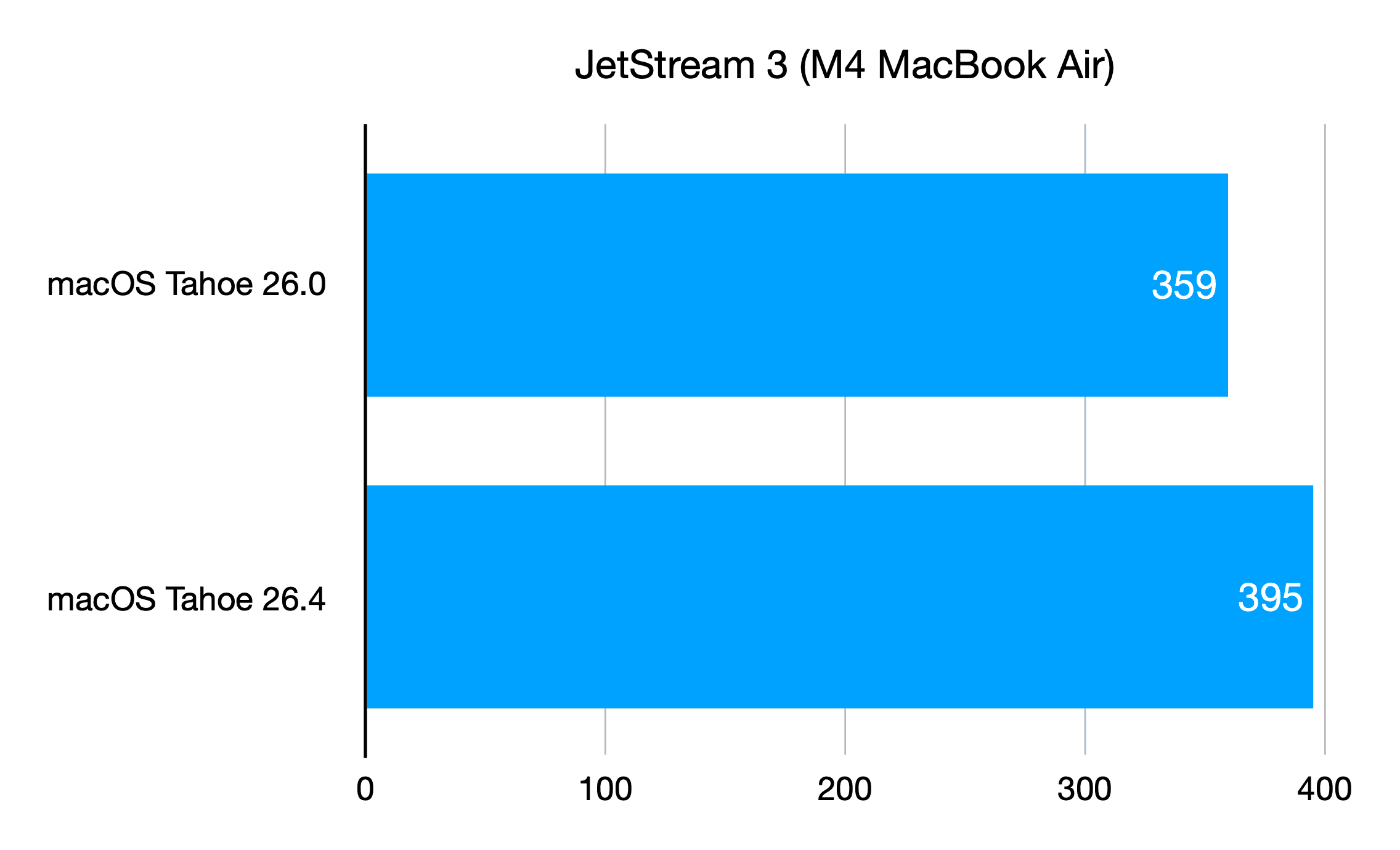
JetStream 3, developed collaboratively by WebKit, Google, and Mozilla, replaces the separate Startup/Runtime scoring model with a unified multi-iteration lifecycle score that captures first-iteration compilation cost, worst-case jank, and sustained throughput in a single geometric mean. The suite adds WasmGC workloads compiled from Dart, Kotlin, and Java, plus modern JavaScript exercising BigInt, async/await, and Promise combinators. To perform well, the WebKit team made deep changes to JavaScriptCore: inlining GC allocation fast-paths into generated machine code (40% improvement on WasmGC subtests), Cohen's type display algorithm for O(1) subtype checks, polymorphic indirect call inlining using runtime profiles of up to three callees, a greedy register allocator with B+ tree interval tracking (2x faster for large functions), and SIMD support in the IPInt interpreter tier. BigInt received Comba multiplication and DIV2BY1 division, while Promise internals moved from JavaScript builtins to C++. Together these changes yielded roughly a 10% score improvement from Safari 26.0 to 26.4.
Uber's first CTO Thuan Pham recounts scaling the company from 40 engineers and 30,000 rides per day in 2013 to one of the most complex engineering organizations ever built. The dispatch system—a single-threaded Node.js monolith—was rewritten in five months to support an N-by-M multi-city, multi-box architecture before it would have hit a capacity wall with New York City traffic. When Travis Kalanick gave a two-month mandate to launch in China with data centers physically on Chinese soil, Pham's team completed it in five months by tackling the hardest city, Chengdu, first. Uber's thousands of microservices emerged not from upfront design but from the rule that all new code must live outside the monolith while a dedicated team decomposed it—a process that took two years as the business grew faster than the extraction effort. Internal tools like M3, Schemaless, and TChannel were built only when open-source alternatives like PostgreSQL failed at Uber's scale.
Alex Russell argues that capable browsers and PWAs are the most powerful—and systematically suppressed—tool for breaking open mobile app-store monopolies. Apple deliberately withholds APIs from competing browser engines that would unlock home-screen web apps, push notifications, and in-app link handling, making DMA compliance a legal fiction. Regulators in the EU, UK, and Japan are squandering rare enforcement powers by focusing on alt stores instead of browser engine choice—the only ecosystem large enough to discipline iOS and Android without a cold-start problem. Because browsers synchronize identity and payment across OSes and feature near-zero switching costs, unleashing real browser competition would erode both the App Store tax and proprietary API lock-in simultaneously. The tech press reinforces this blind spot by accepting the duopolists' framing of mobile competition as a native-app story.
Uber's first CTO Thuan Pham recounts scaling the company from 40 engineers and 30,000 rides per day in 2013 to one of the most complex engineering organizations ever built. The dispatch system—a single-threaded Node.js monolith—was rewritten in five months to support an N-by-M multi-city, multi-box architecture before it would have hit a capacity wall with New York City traffic. When Travis Kalanick gave a two-month mandate to launch in China with data centers physically on Chinese soil, Pham's team completed it in five months by tackling the hardest city, Chengdu, first. Uber's thousands of microservices emerged not from upfront design but from the rule that all new code must live outside the monolith while a dedicated team decomposed it—a process that took two years as the business grew faster than the extraction effort. Internal tools like M3, Schemaless, and TChannel were built only when open-source alternatives like PostgreSQL failed at Uber's scale.
WebAssembly for Web Developers: Getting Started with Wasm in 2026
WebAssembly has matured into a practical production tool in 2026, offering 1.5x to 20x speed improvements over JavaScript for compute-heavy tasks such as image processing, physics simulation, and machine learning inference. Real-world benchmarks show 4K image processing dropping from 180ms in JavaScript to 22ms with Rust-to-Wasm, and further to 8ms with SIMD instructions. Rust with wasm-pack and wasm-bindgen remains the primary toolchain, while AssemblyScript lowers the barrier for TypeScript developers. Beyond the browser, WASI Preview 2 enables Wasm modules to run on edge platforms—Cloudflare Workers, Akamai EdgeWorkers—with cold starts as low as 1–5ms and memory footprints around 1MB per module versus 10MB for containers. WasmGC, now stable in Chrome 119+, Firefox 120+, and Safari 18.2+, enables Kotlin, Dart, and Java to run in the browser while reducing bundle sizes by 60–80%.
Edge Computing for Frontend Developers: Cloudflare Workers, Deno Deploy, and Vercel Edge
Running code at the network edge via V8 isolates reduces Time to First Byte by 60–80% and cuts cold starts from 100–1,000ms (container serverless) to under 1ms. Cloudflare Workers spans 330+ PoPs with a 50ms CPU limit and a $5/month paid tier; Vercel Edge Functions integrate tightly with Next.js middleware at 25ms CPU; Deno Deploy offers 512MB memory—four times more than competitors—at $10/million requests with native TypeScript support. Edge storage requires HTTP-based drivers: Turso (embedded SQLite replicas, sub-millisecond reads), Neon (PostgreSQL with copy-on-write branching), and Cloudflare D1/KV/R2. Common edge patterns include deterministic A/B testing via hashed user IDs stored in Cloudflare KV, JWT validation with the Web Crypto API, and geolocation-based content routing. Resource constraints—128MB memory, 30–50ms CPU, no Node.js fs or child_process—make edge unsuitable for image transcoding, ML inference, or long-running batch jobs.
Making Turborepo 96% Faster with Agents, Sandboxes, and Humans
Vercel engineer Anthony Shew reduced Turborepo's Time to First Task from 8.1 seconds to 716 milliseconds on a 1,000+ package monorepo—a 91% improvement—over eight days by combining AI coding agents with disciplined profiling practices. Initial unattended agents produced some wins (25% wall-clock reduction from reference-based hashing, 6% from replacing the twox-hash crate with xxhash-rust) but also exposed critical agent failure modes: no regression tests, chasing microbenchmark noise rather than real-world gains, and never using the --profile flag. The breakthrough was reformatting Chrome Trace JSON profiles into LLM-readable Markdown—hot functions sorted by self-time, single-line call trees—which dramatically improved agent suggestion quality. An iterative loop of Markdown profiling, agent proposals, hyperfine validation in Vercel Sandboxes (ephemeral Linux containers eliminating system noise), and human review produced 20+ performance PRs: parallelizing git index and lockfile parsing, switching from libgit2 to gix-index, eliminating redundant syscalls in cache fetch (200ms to 130ms across 962 fetches), and replacing heap-allocated SHA-1 strings with a 40-byte stack-allocated OidHash type.
Monorepo in 2026: Turborepo vs Nx vs Bazel for Modern Development Teams
With monorepos now used by 63% of companies with 50 or more developers, choosing the right orchestration tool is a consequential architectural decision. Turborepo suits JavaScript/TypeScript teams of 5–50 packages, offering content-aware task hashing, remote caching via Vercel (cutting CI times by over 90%), and minimal configuration through a single turbo.json; in benchmarks it completes single-machine CI in 25 minutes 32 seconds. Nx adds code generation, named-inputs selective cache invalidation, enforced module boundaries, and Nx Agents for dynamic distributed task execution—completing the same build in 21 minutes 56 seconds, and just 9 minutes 20 seconds distributed. Bazel provides hermetic, action-level reproducible builds for polyglot repositories at 1,000+-engineer scale; Stripe used it to consolidate 300+ services and cut CI from 45 minutes to under 7 minutes. For teams with fewer than 10 packages, pnpm workspaces alone may suffice before adding orchestration tooling.
JetStream 3, developed collaboratively by WebKit, Google, and Mozilla, replaces the separate Startup/Runtime scoring model with a unified multi-iteration lifecycle score that captures first-iteration compilation cost, worst-case jank, and sustained throughput in a single geometric mean. The suite adds WasmGC workloads compiled from Dart, Kotlin, and Java, plus modern JavaScript exercising BigInt, async/await, and Promise combinators. To perform well, the WebKit team made deep changes to JavaScriptCore: inlining GC allocation fast-paths into generated machine code (40% improvement on WasmGC subtests), Cohen's type display algorithm for O(1) subtype checks, polymorphic indirect call inlining using runtime profiles of up to three callees, a greedy register allocator with B+ tree interval tracking (2x faster for large functions), and SIMD support in the IPInt interpreter tier. BigInt received Comba multiplication and DIV2BY1 division, while Promise internals moved from JavaScript builtins to C++. Together these changes yielded roughly a 10% score improvement from Safari 26.0 to 26.4.
Week 14 brought substantive coverage across browser engine development, web standards contributions, and infrastructure tooling. The WebKit team, in collaboration with Google and Mozilla, released JetStream 3, a unified benchmark that replaces separate Startup/Runtime scores with a multi-iteration lifecycle geometric mean capturing compilation cost, worst-case jank, and sustained throughput. To perform well, JavaScriptCore received GC allocation fast-path inlining (40% gain on WasmGC subtests), Cohen's type display algorithm for O(1) subtype checks, and a B+ tree-based greedy register allocator (2x faster for large functions) — collectively yielding roughly a 10% score improvement from Safari 26.0 to 26.4. WasmGC workloads compiled from Dart, Kotlin, and Java are now part of the suite.
A Squarespace engineering team contributed loading="lazy" support for HTML video and audio elements — absent since the attribute arrived for img and iframe in 2019 — through a direct pull request to the WHATWG HTML Standard, 30+ merged Web Platform Tests, and browser patches landing in Chrome 147 GA on April 7. Edge computing matured further: WASI Preview 2 enables Wasm on Cloudflare Workers and Akamai EdgeWorkers with 1–5ms cold starts and ~1MB memory per module, while a deep comparison of Cloudflare Workers, Deno Deploy, and Vercel Edge Functions quantified latency, CPU limits, storage options, and cost tradeoffs.
On the build tooling front, Vercel engineer Anthony Shew cut Turborepo's Time to First Task from 8.1 seconds to 716ms on a 1,000+ package monorepo — 91% faster — in eight days by reformatting Chrome Trace JSON profiles into LLM-readable Markdown, then running AI agent proposals through hyperfine validation in ephemeral Vercel Sandbox containers. A broader monorepo comparison found Turborepo optimal for 5–50-package JS/TS teams, Nx better for distributed CI, and Bazel appropriate at 1,000+-engineer polyglot scale.
Key Takeaways
JetStream 3 (WebKit, Google, Mozilla) replaces the old Startup/Runtime scoring split with a unified multi-iteration geometric mean covering WasmGC, BigInt, and async/await workloads — Safari 26.0 to 26.4 improved roughly 10%.
Squarespace shipped loading="lazy" for HTML video and audio elements through a WHATWG standard contribution and browser patches, reaching Chrome 147 GA on April 7 with Chrome 148 default enablement planned.
Turborepo's Time to First Task dropped 91% (8.1s to 716ms) on a 1,000-package monorepo by converting Chrome Trace profiles to LLM-readable Markdown for agent-guided optimization validated in Vercel Sandboxes.