Week 17's web-dev general items examined the profession's identity during the agentic coding era. A widely discussed essay argued that coding is being commoditized… Compiled for immediate developer deployment.
calendar_todaysummarizeWeek 17-2026
article
TAG: CAREERREAD_TIME: 12_MIN
Coding Is Being Commoditized. Engineering Is Not.
Agentic coding tools can now scaffold applications, refactor modules, and generate tests at unprecedented speed — but the author argues this commoditizes code production, not engineering judgment. The bottleneck shifts from writing lines of code to framing problems correctly, protecting architectural invariants, and recognizing when almost-correct generated output creates long-term risk. Experienced engineers occupy a "sweet spot": their hard-won knowledge of failure modes, blast radius, and system constraints amplifies agentic output rather than being replaced by it. Day-to-day loops — understanding, implementing, testing, debugging, and documentation — all change shape when agents enter the picture, compressing mechanical work so engineers can focus on architecture, ownership, and accountability. The article closes with concrete adaptation advice for both senior engineers and those early in their careers.
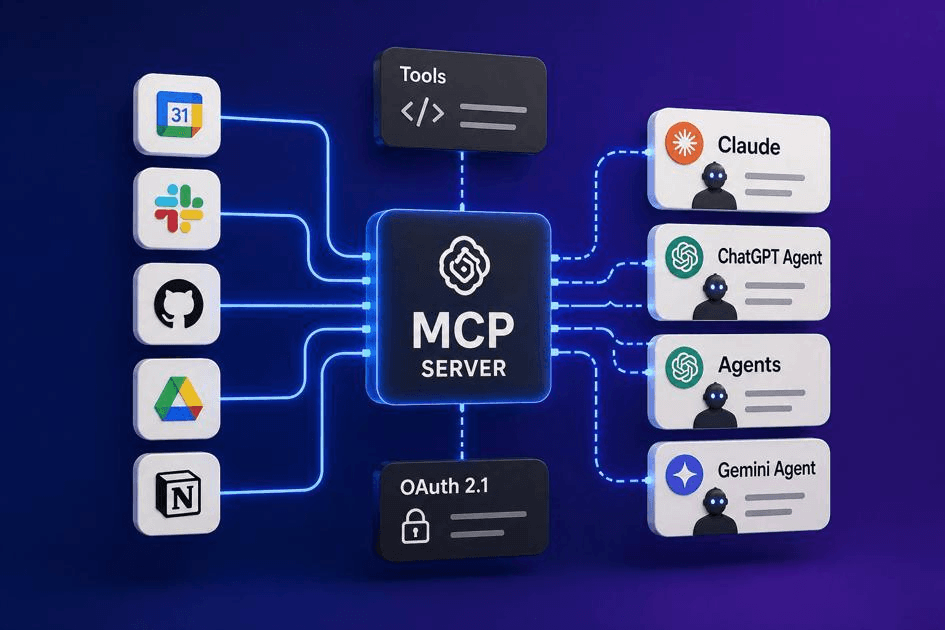
This comprehensive guide walks through the full stack of standards required to make a web application interoperable with AI agents: building an MCP server on the Streamable HTTP transport using JSON-RPC 2.0, implementing OAuth 2.1 with PKCE and Dynamic Client Registration so unknown agents can authenticate without preshared secrets, and publishing protocol discovery metadata across well-known paths including the MCP Server Card, OAuth Protected Resource, and API Catalog. Additional sections cover Markdown content negotiation for LLM-friendly responses, robots.txt bot access controls with Cloudflare Content Signals, and agent commerce protocols including x402 micropayments, Shopify and Google's Universal Commerce Protocol, and Stripe and OpenAI's Agentic Commerce Protocol. The article also provides concrete end-to-end testing instructions using Claude Code.
Shopify Speed Optimization: Fixing the Real Bottlenecks
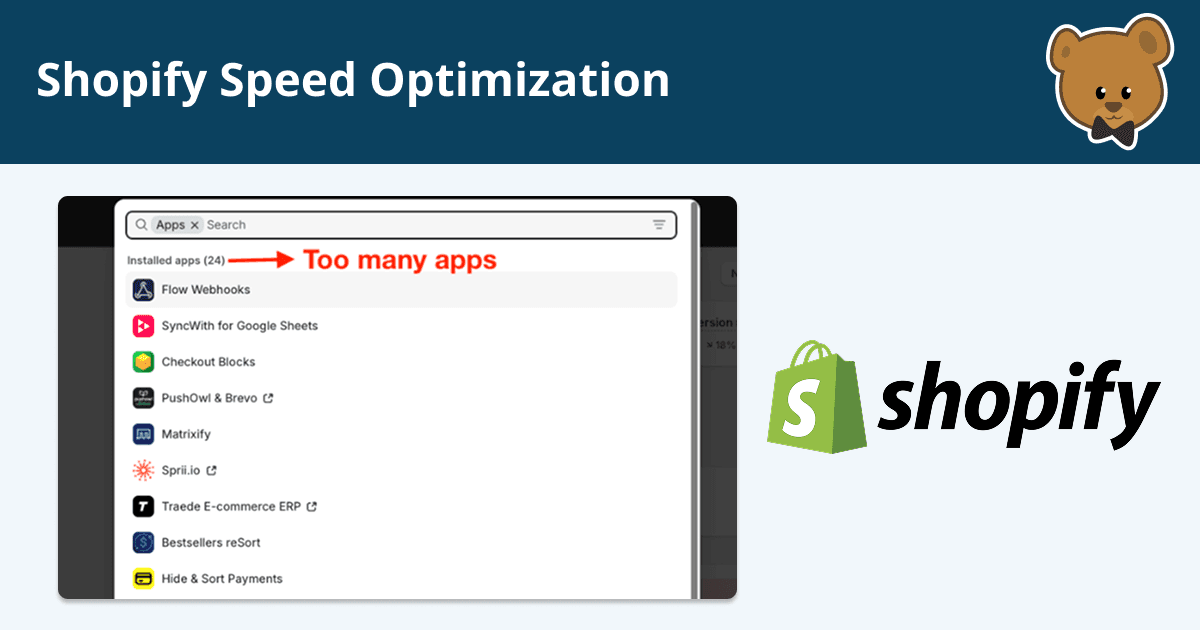
Rather than chasing Lighthouse scores in isolation, this guide targets the structural performance problems that make Shopify stores feel slow regardless of reported metrics. Hero image optimization is covered in depth — keeping images under 180 KB, using a lightweight poster image before loading hero videos to reduce LCP from 9+ seconds to 2.7 seconds, and avoiding heavy carousel libraries like Swiper.js in favor of custom CSS or JS solutions. JavaScript and app bloat receive equal treatment: conditionally loading scripts per page template, deferring non-critical scripts, auditing installed apps for unused or duplicate libraries, and replacing app-provided cart drawers with custom 6 KB implementations instead of 540 KB third-party bundles. Asset strategy sections address CSS splitting by page type, font subsetting for 40-50% size reductions, and using fetchpriority together with the Shopify image_url Liquid filter for responsive image variants.
3 Rules for Getting AI Agents to Find, Use, and Not Exploit Your Devtool
This article introduces "agent experience" (AX) as the discipline of designing developer tools that AI agents can discover, operate, and pay for autonomously. Empirical retrieval tests across Claude, ChatGPT, and Gemini reveal that each LLM sources from fundamentally different channels — Claude favors vendor comparison pages (43%), ChatGPT leans on Reddit (47%), and Gemini surfaces GitHub repos (50%) — requiring multi-channel content strategies rather than simple SEO. The agent-first onboarding pattern inverts the traditional signup funnel: Netlify's anonymous deploy-then-claim model drives tens of thousands of agent-led deployments daily. Security is treated with equal weight: a Wallarm audit of 501 MCP servers found 96% had exploitable vulnerabilities, and the article prescribes a four-tier progressive trust model (anonymous, keyed, claimed, trusted) with agent-specific credentials and rate-limiting by actor type rather than IP address.
Cursor Agent Hooks: Lint and Build Checks After Each Turn
Cursor's agent hooks attach shell scripts to IDE lifecycle events so that lint and build verification can run automatically at the end of each agent turn without manual copy-paste. The article makes the case for the stop hook over sessionEnd: stop fires after each model response and supports a followup_message field that re-injects failures as the next user message, enabling a self-healing loop where the agent repairs its own output. Three production pitfalls are documented in detail: Cursor's bundled Node.js appearing early on PATH causing ESM require errors, returning followup_message on success triggering an infinite agent loop, and debug echo statements corrupting the JSON stdout channel. The reference configuration covers a bash script that sanitizes PATH, skips checks on aborted turns, captures pnpm lint and pnpm build output into safe JSON, and exits 0 even on lint failure so Cursor correctly parses the followup payload.
Trip Report: Node.js Collaboration Summit 2026 London
Bloomberg hosted over 40 Node.js collaborators in London for the first 2026 Collaboration Summit, covering a broad agenda of platform direction and governance. Key technical discussions included a new release schedule starting with v27 that aligns version numbers with the calendar year to reduce concurrent release lines and maintainer burden, a proposed unified Streams API built on async iteration with explicit backpressure strategy selection (shipping experimentally in v25.9.0 as stream/iter), and a proposal for a core node:vfs Virtual File System module to replace monkey-patching patterns. The summit also addressed the governance of AI-assisted contributions following a controversial VFS pull request, a massive influx of AI-generated false-positive security reports straining the security team, and early progress toward OpenTelemetry built-in support and libuv v2 migration planning.
Scott Tolinski and Wes Bos survey the tooling landscape for making AI-generated code more deterministic and maintainable. They highlight Fallow (written in Rust) as a standout all-in-one code quality tool that detects dead code, circular dependencies, duplicate blocks, cyclomatic complexity hotspots, and per-file maintainability scores — all in LLM-readable output. The episode also covers jscpd and Knip for duplication and unused export detection, Project Wallace for CSS variable auditing, Storybook's MCP server for canonical component examples, Sentry CLI and Spotlight for real-time error and trace visibility, Stylelint and a custom Lightning CSS-based linter called Clint, and Vercel's Agent Browser for headless browser automation. The hosts emphasize that writing custom ESLint plugins with deterministic pass/fail rules is more reliable than instructions in agents.md files, which AI agents can silently ignore.
Agentic coding tools can now scaffold applications, refactor modules, and generate tests at unprecedented speed — but the author argues this commoditizes code production, not engineering judgment. The bottleneck shifts from writing lines of code to framing problems correctly, protecting architectural invariants, and recognizing when almost-correct generated output creates long-term risk. Experienced engineers occupy a "sweet spot": their hard-won knowledge of failure modes, blast radius, and system constraints amplifies agentic output rather than being replaced by it. Day-to-day loops — understanding, implementing, testing, debugging, and documentation — all change shape when agents enter the picture, compressing mechanical work so engineers can focus on architecture, ownership, and accountability. The article closes with concrete adaptation advice for both senior engineers and those early in their careers.
Scott Tolinski and Wes Bos survey the tooling landscape for making AI-generated code more deterministic and maintainable. They highlight Fallow (written in Rust) as a standout all-in-one code quality tool that detects dead code, circular dependencies, duplicate blocks, cyclomatic complexity hotspots, and per-file maintainability scores — all in LLM-readable output. The episode also covers jscpd and Knip for duplication and unused export detection, Project Wallace for CSS variable auditing, Storybook's MCP server for canonical component examples, Sentry CLI and Spotlight for real-time error and trace visibility, Stylelint and a custom Lightning CSS-based linter called Clint, and Vercel's Agent Browser for headless browser automation. The hosts emphasize that writing custom ESLint plugins with deterministic pass/fail rules is more reliable than instructions in agents.md files, which AI agents can silently ignore.
This comprehensive guide walks through the full stack of standards required to make a web application interoperable with AI agents: building an MCP server on the Streamable HTTP transport using JSON-RPC 2.0, implementing OAuth 2.1 with PKCE and Dynamic Client Registration so unknown agents can authenticate without preshared secrets, and publishing protocol discovery metadata across well-known paths including the MCP Server Card, OAuth Protected Resource, and API Catalog. Additional sections cover Markdown content negotiation for LLM-friendly responses, robots.txt bot access controls with Cloudflare Content Signals, and agent commerce protocols including x402 micropayments, Shopify and Google's Universal Commerce Protocol, and Stripe and OpenAI's Agentic Commerce Protocol. The article also provides concrete end-to-end testing instructions using Claude Code.
Shopify Speed Optimization: Fixing the Real Bottlenecks
Rather than chasing Lighthouse scores in isolation, this guide targets the structural performance problems that make Shopify stores feel slow regardless of reported metrics. Hero image optimization is covered in depth — keeping images under 180 KB, using a lightweight poster image before loading hero videos to reduce LCP from 9+ seconds to 2.7 seconds, and avoiding heavy carousel libraries like Swiper.js in favor of custom CSS or JS solutions. JavaScript and app bloat receive equal treatment: conditionally loading scripts per page template, deferring non-critical scripts, auditing installed apps for unused or duplicate libraries, and replacing app-provided cart drawers with custom 6 KB implementations instead of 540 KB third-party bundles. Asset strategy sections address CSS splitting by page type, font subsetting for 40-50% size reductions, and using fetchpriority together with the Shopify image_url Liquid filter for responsive image variants.
3 Rules for Getting AI Agents to Find, Use, and Not Exploit Your Devtool
This article introduces "agent experience" (AX) as the discipline of designing developer tools that AI agents can discover, operate, and pay for autonomously. Empirical retrieval tests across Claude, ChatGPT, and Gemini reveal that each LLM sources from fundamentally different channels — Claude favors vendor comparison pages (43%), ChatGPT leans on Reddit (47%), and Gemini surfaces GitHub repos (50%) — requiring multi-channel content strategies rather than simple SEO. The agent-first onboarding pattern inverts the traditional signup funnel: Netlify's anonymous deploy-then-claim model drives tens of thousands of agent-led deployments daily. Security is treated with equal weight: a Wallarm audit of 501 MCP servers found 96% had exploitable vulnerabilities, and the article prescribes a four-tier progressive trust model (anonymous, keyed, claimed, trusted) with agent-specific credentials and rate-limiting by actor type rather than IP address.
Cursor Agent Hooks: Lint and Build Checks After Each Turn
Cursor's agent hooks attach shell scripts to IDE lifecycle events so that lint and build verification can run automatically at the end of each agent turn without manual copy-paste. The article makes the case for the stop hook over sessionEnd: stop fires after each model response and supports a followup_message field that re-injects failures as the next user message, enabling a self-healing loop where the agent repairs its own output. Three production pitfalls are documented in detail: Cursor's bundled Node.js appearing early on PATH causing ESM require errors, returning followup_message on success triggering an infinite agent loop, and debug echo statements corrupting the JSON stdout channel. The reference configuration covers a bash script that sanitizes PATH, skips checks on aborted turns, captures pnpm lint and pnpm build output into safe JSON, and exits 0 even on lint failure so Cursor correctly parses the followup payload.
Trip Report: Node.js Collaboration Summit 2026 London
Bloomberg hosted over 40 Node.js collaborators in London for the first 2026 Collaboration Summit, covering a broad agenda of platform direction and governance. Key technical discussions included a new release schedule starting with v27 that aligns version numbers with the calendar year to reduce concurrent release lines and maintainer burden, a proposed unified Streams API built on async iteration with explicit backpressure strategy selection (shipping experimentally in v25.9.0 as stream/iter), and a proposal for a core node:vfs Virtual File System module to replace monkey-patching patterns. The summit also addressed the governance of AI-assisted contributions following a controversial VFS pull request, a massive influx of AI-generated false-positive security reports straining the security team, and early progress toward OpenTelemetry built-in support and libuv v2 migration planning.
Week 17's web-dev general items examined the profession's identity during the agentic coding era. A widely discussed essay argued that coding is being commoditized but engineering judgment is not — the bottleneck shifts from writing lines to framing problems, protecting architectural invariants, and recognizing when almost-correct AI output creates long-term risk. A companion guide to making apps agent-ready laid out the full protocol stack: MCP servers on Streamable HTTP with JSON-RPC 2.0, OAuth 2.1 with PKCE and Dynamic Client Registration, protocol discovery via well-known paths (MCP Server Card, OAuth Protected Resource, API Catalog), Markdown content negotiation, robots.txt bot access controls, and commerce protocols including x402 micropayments, Universal Commerce Protocol, and the Agentic Commerce Protocol.
Tooling for AI-assisted development received substantial coverage. Cursor agent hooks using the stop event and followup_message field enable self-healing lint-and-build loops after each agent turn, with documented pitfalls around Node.js PATH ordering, infinite loops on success, and JSON stdout corruption. Syntax.fm highlighted Fallow (Rust-based, LLM-readable output) as an all-in-one code quality tool alongside jscpd, Knip, Project Wallace, and Storybook's MCP server; the hosts emphasized that deterministic custom ESLint plugins beat instructions in agents.md files. An Evil Martians post on agent experience (AX) showed that Claude, ChatGPT, and Gemini each source documentation from fundamentally different channels, that Netlify's anonymous deploy-then-claim model drives tens of thousands of agent-led deployments daily, and that a Wallarm audit found 96% of 501 MCP servers had exploitable vulnerabilities.
Performance and infrastructure also featured: a Shopify optimization guide demonstrated reducing LCP from 9+ seconds to 2.7 seconds via lightweight hero video posters and keeping hero images under 180 KB, replacing 540 KB third-party cart bundles with 6 KB custom implementations, and using fetchpriority with Shopify's image_url Liquid filter. The Node.js Collaboration Summit 2026 in London previewed a calendar-year release schedule starting with v27, an experimental async-iteration-based Streams API (stream/iter in v25.9.0), and a proposed node:vfs Virtual File System module.
Key Takeaways
Agentic coding commoditizes code production but amplifies experienced engineers who can frame problems, protect architectural invariants, and spot long-term risk in nearly-correct generated output.
Making an app agent-ready requires a full protocol stack: MCP server on Streamable HTTP, OAuth 2.1 with PKCE and Dynamic Client Registration, well-known discovery paths, and Markdown content negotiation — not just an API.
Cursor's stop hook with followup_message enables self-healing agentic lint loops, but requires careful PATH sanitization and never returning followup_message on success to avoid infinite agent loops.