Weekly Digest // WEB_DEV_GENERAL — Week 34-2026
folder_openWeekly Report

Frontend Judgment Moves Above the Code — Week 34 Web Development

Agent-era frontend work shifts attention toward compact context, measurable browser overhead, and the judgment needed to direct generated implementation.

calendar_todaysummarizeWeek 34-2026
TAG: INDUSTRY SHIFTREAD_TIME: 14_MIN

The asteroid currently hitting frontend web development

Nolan Lawson argues that coding agents are changing frontend education because they can already answer specialist browser-performance questions and produce acceptable low-risk interface code. A trace with high style cost still requires knowledge of selector matching, invalidation scope, synchronous recalculation, inherited properties, and shadow roots, but an agent can now assemble that checklist quickly. The durable expertise moves toward posing the right question, measuring Selector Stats, checking initiators, and judging whether the recommendation fits the product. Frontend work is not disappearing; the unit of value is moving above individual syntax. Educators and senior engineers need to teach verification and tradeoffs as explicitly as implementation.

TAG: AGENT WORKFLOWREAD_TIME: 21_MIN

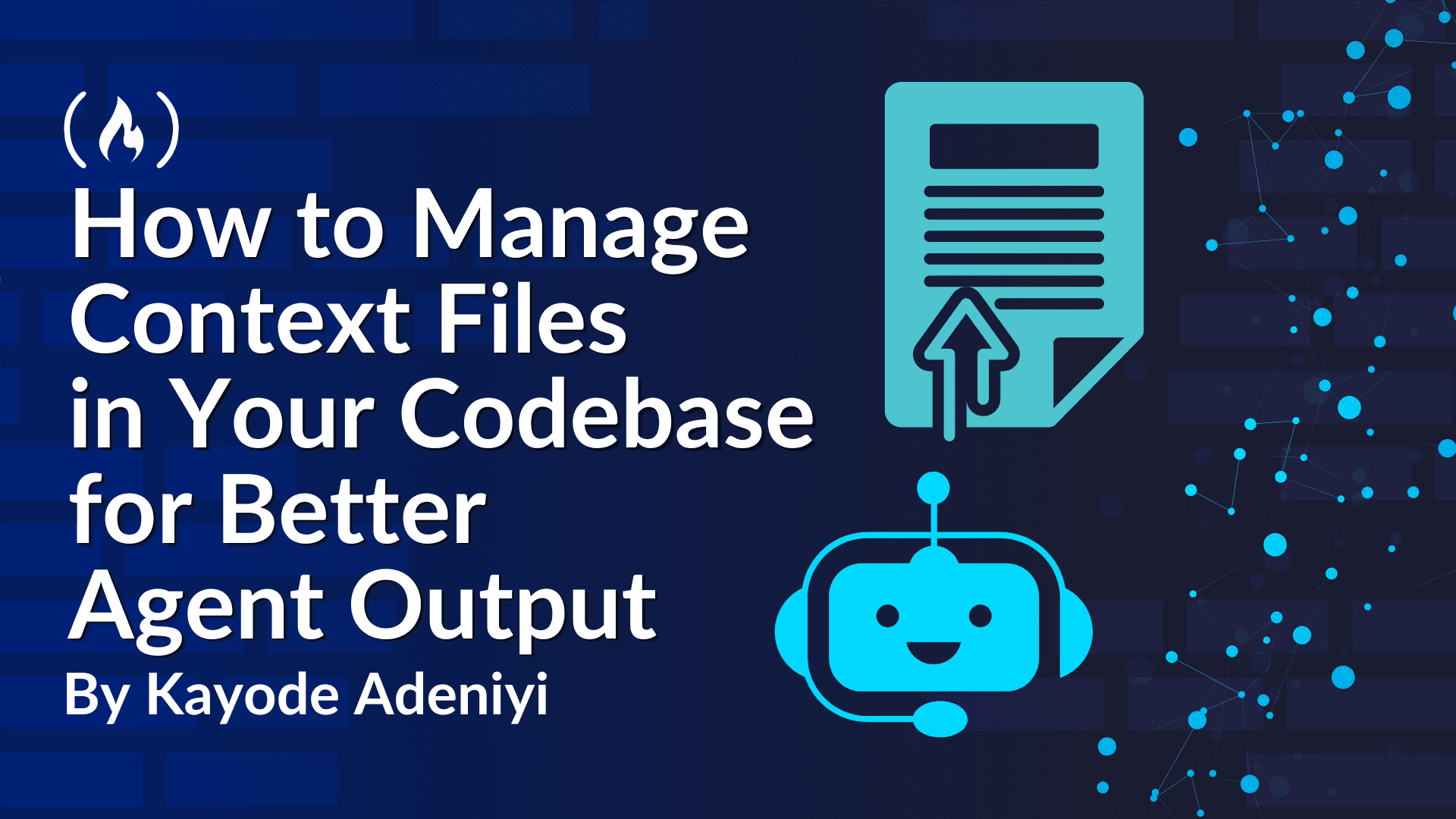
How to Manage Context Files in Your Codebase and Get Better Output From AI Coding Agents

Agent context degrades when a large startup manual competes with source files, tool output, and the current error. One illustrative session spends about 12,000 tokens on system tools, 4,800 on context files, 9,000 on three source files, and 3,500 on a test trace before implementation begins. The proposed structure keeps one short root map, adds scoped files near the code they govern, and links to architecture or decision records only when a task needs them. Generated variants for different tools should share one source of truth and a drift check. Good context tells the agent where to look without consuming the space needed to inspect evidence.

TAG: WEB PERFORMANCEREAD_TIME: 10_MIN

Unattributed Navigation Overhead (UNO) Is Underrated – CSS Wizardry

Unattributed Navigation Overhead names time inside a navigation that does not belong to redirects, DNS, connection, TLS, server work, or transfer. One production investigation surfaced about 270 ms that had previously disappeared into a broad TTFB number; named redirects were another 610 ms. UNO can include browser initialization, unloading the prior page, disk or cache access, resource contention, and timing hidden by cross-origin restrictions. The metric is derived from the Navigation Timing entry by subtracting the components the platform can attribute. Performance teams should chart it separately so browser and environment overhead cannot masquerade as backend latency.

ENGINEERING PRACTICE92:30

From Chrome DevTools to AI Engineering, with Addy Osmani

Addy Osmani traces a career from Chrome DevTools and web-performance guidance to engineering with coding agents. The discussion connects the origin of Core Web Vitals, practical browser measurement, and today's shift from writing every line to orchestrating and reviewing generated work. The central warning is cognitive surrender: faster production is useful only if engineers retain the ability to test assumptions, inspect the system, and reject plausible mistakes. Agent-era leverage therefore depends on durable fundamentals rather than replacing them. Teams should automate routine construction while preserving human ownership of architecture, product tradeoffs, performance, and safety.

AI_INFOGRAPHIC
From Chrome DevTools to AI Engineering, with Addy Osmani — infographic
summarizeDigest_Summary

Nolan Lawson describes an asteroid hitting frontend education: agents can now answer specialist browser-performance questions and generate lower-risk interface code well enough to change what expertise is worth teaching. The conclusion is not that browser knowledge disappears, but that more value moves into framing, verification, product judgment, and the ability to recognize when an attractive answer is wrong.

That judgment needs compact, current context. A practical context-file budget shows roughly 12,000 tokens consumed by system tools, 4,800 by startup instructions, 9,000 by three source files, and 3,500 by one test trace. Replacing a giant manual with a short map and on-demand documents leaves room for the agent to read the evidence required by the present task.

Measurement remains the counterweight to plausible output. Unattributed Navigation Overhead exposed about 270 ms that a conventional TTFB view had hidden, while the Addy Osmani interview traces the path from Chrome DevTools and Core Web Vitals to AI-assisted engineering. The shared discipline is to preserve critical thinking: give agents navigable context, measure the browser and system boundary, and keep humans responsible for the decision rather than every keystroke.

Key Takeaways
  • Teach frontend specialists to frame constraints, inspect traces, validate accessibility, and evaluate tradeoffs; generated syntax does not replace responsibility for the resulting experience.
  • Keep the root agent instruction file short and stable, link to task-specific documents on demand, and add a maintenance check so context cannot silently drift from the codebase.
  • Measure navigation as redirects, DNS, connection, TLS, server time, transfer, and UNO instead of treating TTFB as a single backend number.