Storybook 10.3 headlined the week with its MCP integration for React, giving AI agents direct, structured access to real components, stories, docs, and tests. The… Compiled for immediate developer deployment.
calendar_todaysummarizeWeek 15-2026
article
TAG: STORYBOOKREAD_TIME: 4_MIN
Storybook 10.3: MCP, A11y Improvements, and Workflow Upgrades
Storybook 10.3 introduces MCP for React, giving AI agents direct access to real components, stories, docs, and tests so they can build production-grade UI without hallucinating. The MCP toolset is split into three layers: a Dev toolset for showing work in all key UI states, a Docs toolset for reusing design system components, and a Test toolset for self-correcting via focused component and accessibility tests. The release also delivers a substantial accessibility overhaul—better ARIA semantics, keyboard navigation, high-contrast support, and reduced-motion refinements—applied to Storybook's own UI. CSF Factories, the more type-safe story authoring format, now extends beyond React to Vue, Angular, and Web Components. Ecosystem additions include Vite 8, Next.js 16.2, Angular 21, and community integrations for Vike and Astro.
This article diagnoses a concrete multi-team divergence problem—the same Modal component animated with four different duration props across Checkout, Onboarding, Settings, and Growth teams—and argues that motion tokens are the structural fix. The solution begins by naming a five-step duration scale (50ms–800ms) and an easing vocabulary as CSS custom properties, then layering semantic intents on top: --motion-enter, --motion-exit, --motion-hover, --motion-spring, and --motion-feedback. The semantic layer encodes the enter/exit asymmetry rule (exits at ~60% of entrance duration, ease-in vs. ease-out) so developers reach for an intent token rather than hand-tuning milliseconds. The article also clarifies when to use Framer Motion's AnimatePresence (DOM lifecycle unmounts only) versus pure CSS transitions, explains spring easing as semantically positive feedback versus standard easing for errors, and closes with a root-level prefers-reduced-motion block that zeroes all durations without removing transitions.
Netguru's Silk is a free, open design system for mobile and responsive web, distributed via Figma Community alongside the Phosphor icon set. Its token architecture layers primitives (12-shade color ramps) beneath semantic aliases—Accent, Neutral, Semantic—so swapping one primitive variable updates every component automatically. Typography is controlled through Figma variables covering font-family, font-size, font-weight, and letter-spacing across desktop, tablet, and mobile modes, with Inter as the default and variable fonts recommended for replacements. Shape, spacing (8 px grid), stroke weight, and grid breakpoints are all governed by variables in dedicated collections. For challenging hues like honey-yellow or bright teal, the guide details how to adjust functional variable groups (colors/text, colors/surface, colors/border) after palette replacement, and explains component authoring rules including Auto Layout structure, WCAG 2.2 AA contrast targets (4.5:1 for text, 3:1 for interactive elements), and a kebab-case/camelCase naming convention.
The Intl API: The Best Browser API You're Not Using
The browser-native Intl API can replace Moment.js (295 kB), date-fns (77 kB), Luxon (82 kB), and numeral.js with zero bundle cost. Polypane's Kilian Valkhof covers eight formatters in depth: Intl.DateTimeFormat for locale-aware dates with dateStyle/timeStyle options and formatToParts for per-part markup; Intl.RelativeTimeFormat for human-friendly relative strings like 'yesterday'; Intl.DurationFormat for clock-style and long-form durations down to nanoseconds; Intl.NumberFormat for numbers, currencies (with symbol position and currencySign accounting mode), units (kilometer-per-hour, celsius), and compact notation; Intl.ListFormat for conjunction/disjunction/unit list types; Intl.PluralRules for cardinal and ordinal plural categories across languages including Arabic's six forms; Intl.Segmenter for grapheme, word, and sentence segmentation that correctly handles Japanese and emoji ligatures; and Intl.Collator for locale-aware sorting with numeric, sensitivity, and phonebook collation options. All share the same construct-once, reuse-many pattern.
Nielsen Norman Group argues that AI agents—systems that pursue goals by taking iterative actions through digital interfaces—are now functional users of the products we design, requiring a core redefinition of the word 'user.' The article maps three interaction modes agents use today: vision-based (screenshot + vision model, token-intensive and error-prone), accessibility-tree parsing (reads the browser's structured HTML representation, far cheaper and more reliable), and direct API access via standards like MCP. It then identifies the design practices that serve both humans and agents simultaneously—semantic HTML, descriptive labeling, consistent navigation patterns, minimal visual-only information architecture—and frames accessibility investment as now carrying a clear business case. The piece also addresses when blocking agents is rational: ad-supported content where the visit is the product, regulated contexts with mandatory friction (financial, healthcare), competitive intelligence, or products that want to be the agent layer themselves.
TetraLogical's Ela Gorla outlines a practitioner framework for conducting user research with vulnerable participants—people who are bereaved, in financial difficulty, or survivors of abuse. The guide addresses four areas: necessity (only recruit vulnerable participants when their perspective is irreplaceable to the research question), privacy (limit data collection to what the question requires, restrict data access, follow GDPR, and confirm consent verbally at session start), trauma-informed facilitation (flag sensitive topics in advance, use neutral language that avoids loaded words like 'friend' or 'suffers from a disability', and give participants explicit permission to pause or exit), and researcher wellbeing (ensuring facilitators are comfortable with the topic, receive appropriate training, and can access mentoring). The article grounds all guidance in practical examples such as bereavement notification pages and assistive technology testing.
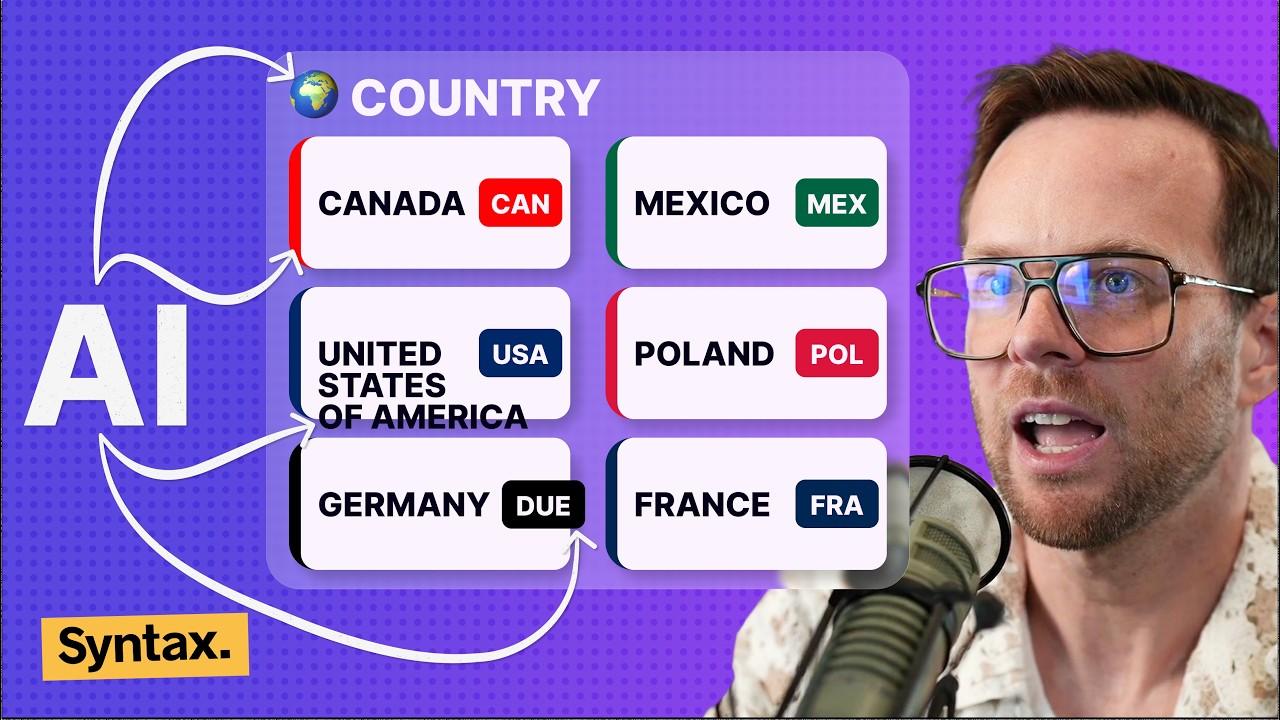
Syntax hosts Wes Bos and Scott Tolinski discuss why AI tools consistently produce poor CSS and UI design, even with rigid design systems in place. Key problems identified: models default to locally patching rather than applying global system conventions, they lag behind modern CSS features like native nesting, and hidden system prompts (such as the Codex CLI header that mandates gradients and 'expressive fonts') override user instructions. The conversation covers practical workarounds—shipping design system rules as skills or vibe-rules packages, returning docs as markdown to AI agents instead of rendered HTML (as Sentry does), and using a 'perfectly mediocre' AI model in technical interviews to surface candidates who truly understand system-level thinking. Both hosts conclude that strong taste, architectural knowledge, and the ability to direct AI rather than blindly accept its output remain essential human skills.
Storybook 10.3: MCP, A11y Improvements, and Workflow Upgrades
Storybook 10.3 introduces MCP for React, giving AI agents direct access to real components, stories, docs, and tests so they can build production-grade UI without hallucinating. The MCP toolset is split into three layers: a Dev toolset for showing work in all key UI states, a Docs toolset for reusing design system components, and a Test toolset for self-correcting via focused component and accessibility tests. The release also delivers a substantial accessibility overhaul—better ARIA semantics, keyboard navigation, high-contrast support, and reduced-motion refinements—applied to Storybook's own UI. CSF Factories, the more type-safe story authoring format, now extends beyond React to Vue, Angular, and Web Components. Ecosystem additions include Vite 8, Next.js 16.2, Angular 21, and community integrations for Vike and Astro.
Syntax hosts Wes Bos and Scott Tolinski discuss why AI tools consistently produce poor CSS and UI design, even with rigid design systems in place. Key problems identified: models default to locally patching rather than applying global system conventions, they lag behind modern CSS features like native nesting, and hidden system prompts (such as the Codex CLI header that mandates gradients and 'expressive fonts') override user instructions. The conversation covers practical workarounds—shipping design system rules as skills or vibe-rules packages, returning docs as markdown to AI agents instead of rendered HTML (as Sentry does), and using a 'perfectly mediocre' AI model in technical interviews to surface candidates who truly understand system-level thinking. Both hosts conclude that strong taste, architectural knowledge, and the ability to direct AI rather than blindly accept its output remain essential human skills.
This article diagnoses a concrete multi-team divergence problem—the same Modal component animated with four different duration props across Checkout, Onboarding, Settings, and Growth teams—and argues that motion tokens are the structural fix. The solution begins by naming a five-step duration scale (50ms–800ms) and an easing vocabulary as CSS custom properties, then layering semantic intents on top: --motion-enter, --motion-exit, --motion-hover, --motion-spring, and --motion-feedback. The semantic layer encodes the enter/exit asymmetry rule (exits at ~60% of entrance duration, ease-in vs. ease-out) so developers reach for an intent token rather than hand-tuning milliseconds. The article also clarifies when to use Framer Motion's AnimatePresence (DOM lifecycle unmounts only) versus pure CSS transitions, explains spring easing as semantically positive feedback versus standard easing for errors, and closes with a root-level prefers-reduced-motion block that zeroes all durations without removing transitions.
Netguru's Silk is a free, open design system for mobile and responsive web, distributed via Figma Community alongside the Phosphor icon set. Its token architecture layers primitives (12-shade color ramps) beneath semantic aliases—Accent, Neutral, Semantic—so swapping one primitive variable updates every component automatically. Typography is controlled through Figma variables covering font-family, font-size, font-weight, and letter-spacing across desktop, tablet, and mobile modes, with Inter as the default and variable fonts recommended for replacements. Shape, spacing (8 px grid), stroke weight, and grid breakpoints are all governed by variables in dedicated collections. For challenging hues like honey-yellow or bright teal, the guide details how to adjust functional variable groups (colors/text, colors/surface, colors/border) after palette replacement, and explains component authoring rules including Auto Layout structure, WCAG 2.2 AA contrast targets (4.5:1 for text, 3:1 for interactive elements), and a kebab-case/camelCase naming convention.
The Intl API: The Best Browser API You're Not Using
The browser-native Intl API can replace Moment.js (295 kB), date-fns (77 kB), Luxon (82 kB), and numeral.js with zero bundle cost. Polypane's Kilian Valkhof covers eight formatters in depth: Intl.DateTimeFormat for locale-aware dates with dateStyle/timeStyle options and formatToParts for per-part markup; Intl.RelativeTimeFormat for human-friendly relative strings like 'yesterday'; Intl.DurationFormat for clock-style and long-form durations down to nanoseconds; Intl.NumberFormat for numbers, currencies (with symbol position and currencySign accounting mode), units (kilometer-per-hour, celsius), and compact notation; Intl.ListFormat for conjunction/disjunction/unit list types; Intl.PluralRules for cardinal and ordinal plural categories across languages including Arabic's six forms; Intl.Segmenter for grapheme, word, and sentence segmentation that correctly handles Japanese and emoji ligatures; and Intl.Collator for locale-aware sorting with numeric, sensitivity, and phonebook collation options. All share the same construct-once, reuse-many pattern.
Nielsen Norman Group argues that AI agents—systems that pursue goals by taking iterative actions through digital interfaces—are now functional users of the products we design, requiring a core redefinition of the word 'user.' The article maps three interaction modes agents use today: vision-based (screenshot + vision model, token-intensive and error-prone), accessibility-tree parsing (reads the browser's structured HTML representation, far cheaper and more reliable), and direct API access via standards like MCP. It then identifies the design practices that serve both humans and agents simultaneously—semantic HTML, descriptive labeling, consistent navigation patterns, minimal visual-only information architecture—and frames accessibility investment as now carrying a clear business case. The piece also addresses when blocking agents is rational: ad-supported content where the visit is the product, regulated contexts with mandatory friction (financial, healthcare), competitive intelligence, or products that want to be the agent layer themselves.
TetraLogical's Ela Gorla outlines a practitioner framework for conducting user research with vulnerable participants—people who are bereaved, in financial difficulty, or survivors of abuse. The guide addresses four areas: necessity (only recruit vulnerable participants when their perspective is irreplaceable to the research question), privacy (limit data collection to what the question requires, restrict data access, follow GDPR, and confirm consent verbally at session start), trauma-informed facilitation (flag sensitive topics in advance, use neutral language that avoids loaded words like 'friend' or 'suffers from a disability', and give participants explicit permission to pause or exit), and researcher wellbeing (ensuring facilitators are comfortable with the topic, receive appropriate training, and can access mentoring). The article grounds all guidance in practical examples such as bereavement notification pages and assistive technology testing.
Storybook 10.3 headlined the week with its MCP integration for React, giving AI agents direct, structured access to real components, stories, docs, and tests. The toolset is split into three layers — Dev (UI state visibility), Docs (component reuse), and Test (self-correcting via accessibility checks) — enabling agents to build production-grade UI without hallucinating. The release also expanded the more type-safe CSF Factories format beyond React to Vue, Angular, and Web Components, and delivered a comprehensive accessibility overhaul of Storybook's own UI covering ARIA semantics, keyboard navigation, and high-contrast support. Ecosystem additions include Vite 8, Next.js 16.2, and Angular 21.
Netguru published detailed documentation for Silk, their free Figma Community design system for mobile and responsive web. Silk's token architecture layers 12-shade primitive color ramps beneath Accent, Neutral, and Semantic aliases, so a single primitive change propagates across all components automatically. The system targets WCAG 2.2 AA compliance — 4.5:1 for text and 3:1 for interactive elements — and uses a kebab-case/camelCase naming convention across all token collections. Separately, a practical article on motion tokens introduced a five-step duration scale (50ms–800ms) and semantic intent tokens like --motion-enter and --motion-exit to eliminate per-team animation divergence.
The design-systems discussion was enriched by two broader UX perspectives. Nielsen Norman Group reframed AI agents as literal users of the products we design, arguing that semantic HTML, descriptive labeling, and consistent navigation now carry a clear business case via accessibility-tree parsing. A Syntax podcast episode with Wes Bos and Scott Tolinski examined why AI tools consistently underperform at CSS — models default to local patches, lag behind features like native nesting, and hidden system prompts (such as Codex CLI's gradient mandate) override user intent.
Key Takeaways
Storybook 10.3's MCP integration gives AI agents structured access to real components via three tool layers — Dev, Docs, and Test — enabling production-grade UI generation without hallucination.
Netguru's Silk design system uses 12-shade primitive color ramps with Accent/Neutral/Semantic aliases so one token change updates all components, targeting WCAG 2.2 AA contrast ratios throughout.
Nielsen Norman Group argues AI agents now consume UIs via accessibility-tree parsing, making semantic HTML and descriptive labels a direct business investment — not just an accessibility compliance checkbox.