NNG research this week reaffirmed that most design-system teams are deliberately small — 2 to 5 people regardless of company size — and that this leanness is a… Compiled for immediate developer deployment.
calendar_todaysummarizeWeek 20-2026
article
TAG: TEAM OPSREAD_TIME: 8_MIN
Small by Design: The Strength of Lean Design-System Teams
Most design-system teams consist of just 2-5 people regardless of company size, and NNG research suggests this leanness is a feature, not a bug. Small teams share context without handoffs, resolve conflicts faster, and blur disciplinary roles so designers touch APIs and engineers critique designs. Forced prioritization keeps the system tied to real product roadmap needs rather than sprawling into unmaintained components. The article distinguishes between teams that are lean by deliberate design-ops strategy versus teams that are merely understaffed, arguing the latter face burnout and growing maintenance debt. Scaling impact without headcount happens through champion programs and contributor models, but only when backed by executive sponsorship and realistic capacity expectations.
Design token linting works best as a layered defense across four pipeline stages: at the source (in the design tool like Figma or Tokens Studio, or in the editor via JSON schema), at the pre-commit hook, in the CI pipeline, and at the pre-publish gate before an npm package ships. The article maps each stage to its token ownership model — design-tool-first, code-first, or product-code with CSS custom properties — and explains which checks are available at each layer. Structural checks like circular reference detection and cross-token resolution require all token files to be available simultaneously, meaning they only become possible at the pre-commit or CI stages. Teams just starting out should implement Stage 3 (CI) first, while teams publishing token packages must run Stage 4 in strict mode where warnings become hard errors.
Building a General-Purpose Accessibility Agent — What GitHub Learned
GitHub is piloting an experimental accessibility agent integrated into GitHub Copilot CLI and VS Code that has reviewed 3,535 pull requests with a 68% resolution rate. The agent uses a two-sub-agent architecture — a passive reviewer and an active implementer — that communicate only through structured template schemas to avoid token waste and hallucinations. Key design decisions include a shell-script heuristic that scores code complexity and disables code generation above a threshold, an explicit blocklist of high-risk patterns like drag-and-drop and data grids that LLMs cannot reliably make accessible, and linear sequential execution rather than parallel sub-agents. Because LLMs are trained on decades of inaccessible code, the agent draws heavily from GitHub's manually curated corpus of logged accessibility issues and their remediation PRs, which proved far more effective than generic best-practice instructions.
Practical Interface Patterns for AI Transparency (Part 2)
Replacing spinners with informative status updates is the foundation of trustworthy agentic UIs — the article proposes a three-part microcopy formula: Action Word, Specific Item, and Limits/Rules. Four concrete interface patterns map to different risk levels: the Living Breadcrumb for low-stakes background tasks, the Dynamic Checklist for high-stakes multi-step flows (requiring front-end state management and webhook event handling), the Thinking Toggle for expert users who need sanitized raw log access, and the Audit Trail as a persistent post-task receipt. The piece also covers designing for partial success, disentangling tool failures from agent failures, and the reality that power users often ignore real-time updates entirely — making a persistent Audit Trail the safety net that prevents AI output from being discarded and reworked by hand when results diverge from expectations.
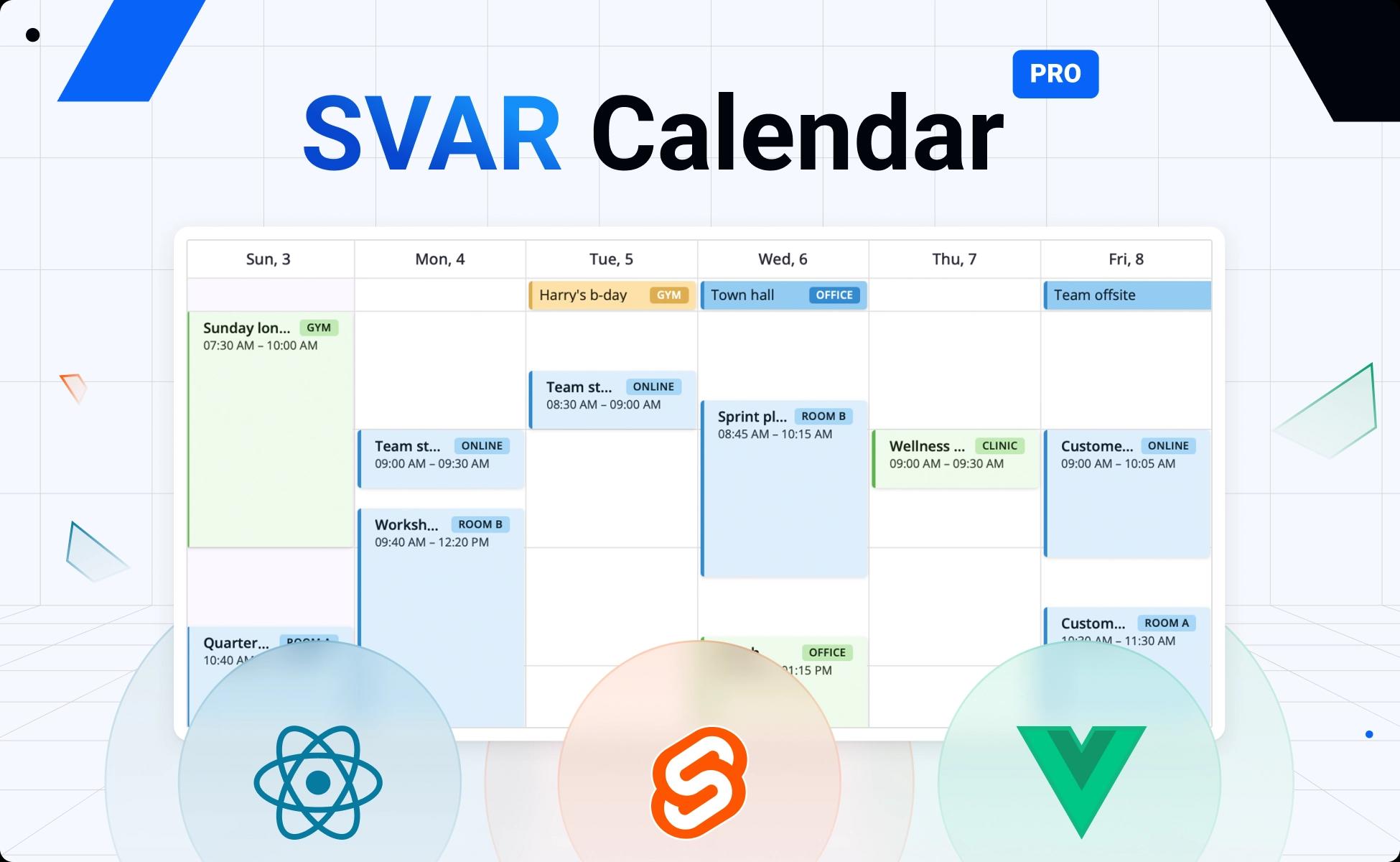
SVAR Event Calendar: Framework-Native Component for React, Svelte & Vue
SVAR Calendar is a new open-source event calendar component released under MIT license with native implementations for Svelte, React, and Vue — all sharing a unified API while remaining framework-native under the hood. The free tier includes Day, Week, and Month views, drag-and-drop event creation and resizing, a built-in event editor, calendar group management with sidebar toggles, iCal import/export, theme customization via CSS variables, full localization, and a RestDataProvider for REST API integration. The PRO edition adds Year, Agenda, Resources, and Timeline views along with recurring events. The component positions itself between lightweight options like react-big-calendar and heavyweight enterprise tools like Bryntum, with TypeScript support throughout.
Digital documents — including PDF, Word (.docx), and EPUB files — must meet WCAG 2.1 Level AA under a growing body of legislation including the European Accessibility Act, ADA Title II (deadline April 2027), and UK PSBAR. The article covers the most common accessibility barriers: missing alt text on images, text embedded in low-resolution raster images, illogical reading order, and absence of semantic heading structure. Each format has distinct considerations: PDFs are fixed-layout and require PDF/UA (ISO 14289) alongside WCAG techniques; EPUB files are HTML/XML-based and follow EPUB Accessibility 1.1; Word documents should pass Microsoft's built-in Accessibility Checker before export. A key principle throughout is that accessibility must be designed in from the start, not retrofitted after content is created.
Becky (designer) and Alan (Head of Design) at Beyond Identity demonstrate how their four-person design team uses Claude Code end-to-end, from building a live sandbox environment that pulls in production components to replacing Figma flows for stakeholder review. Key workflow elements include a secret control panel for toggling between design iterations and user roles, a VS Code plugin Alan built to enable visual commenting directly on sandbox prototypes, a CLAUDE.md file that enforces design system constraints like MUI-only components and specific icon libraries, and a custom Claude skill that audits for hardcoded color values and spacing violations. Alan also walks through bootstrapping the team's design system by feeding Claude screenshots from Figma and iterating over a weekend, eventually getting engineering buy-in to connect the sandbox to the real production design system.
Small by Design: The Strength of Lean Design-System Teams
Most design-system teams consist of just 2-5 people regardless of company size, and NNG research suggests this leanness is a feature, not a bug. Small teams share context without handoffs, resolve conflicts faster, and blur disciplinary roles so designers touch APIs and engineers critique designs. Forced prioritization keeps the system tied to real product roadmap needs rather than sprawling into unmaintained components. The article distinguishes between teams that are lean by deliberate design-ops strategy versus teams that are merely understaffed, arguing the latter face burnout and growing maintenance debt. Scaling impact without headcount happens through champion programs and contributor models, but only when backed by executive sponsorship and realistic capacity expectations.
Becky (designer) and Alan (Head of Design) at Beyond Identity demonstrate how their four-person design team uses Claude Code end-to-end, from building a live sandbox environment that pulls in production components to replacing Figma flows for stakeholder review. Key workflow elements include a secret control panel for toggling between design iterations and user roles, a VS Code plugin Alan built to enable visual commenting directly on sandbox prototypes, a CLAUDE.md file that enforces design system constraints like MUI-only components and specific icon libraries, and a custom Claude skill that audits for hardcoded color values and spacing violations. Alan also walks through bootstrapping the team's design system by feeding Claude screenshots from Figma and iterating over a weekend, eventually getting engineering buy-in to connect the sandbox to the real production design system.
Design token linting works best as a layered defense across four pipeline stages: at the source (in the design tool like Figma or Tokens Studio, or in the editor via JSON schema), at the pre-commit hook, in the CI pipeline, and at the pre-publish gate before an npm package ships. The article maps each stage to its token ownership model — design-tool-first, code-first, or product-code with CSS custom properties — and explains which checks are available at each layer. Structural checks like circular reference detection and cross-token resolution require all token files to be available simultaneously, meaning they only become possible at the pre-commit or CI stages. Teams just starting out should implement Stage 3 (CI) first, while teams publishing token packages must run Stage 4 in strict mode where warnings become hard errors.
Building a General-Purpose Accessibility Agent — What GitHub Learned
GitHub is piloting an experimental accessibility agent integrated into GitHub Copilot CLI and VS Code that has reviewed 3,535 pull requests with a 68% resolution rate. The agent uses a two-sub-agent architecture — a passive reviewer and an active implementer — that communicate only through structured template schemas to avoid token waste and hallucinations. Key design decisions include a shell-script heuristic that scores code complexity and disables code generation above a threshold, an explicit blocklist of high-risk patterns like drag-and-drop and data grids that LLMs cannot reliably make accessible, and linear sequential execution rather than parallel sub-agents. Because LLMs are trained on decades of inaccessible code, the agent draws heavily from GitHub's manually curated corpus of logged accessibility issues and their remediation PRs, which proved far more effective than generic best-practice instructions.
Practical Interface Patterns for AI Transparency (Part 2)
Replacing spinners with informative status updates is the foundation of trustworthy agentic UIs — the article proposes a three-part microcopy formula: Action Word, Specific Item, and Limits/Rules. Four concrete interface patterns map to different risk levels: the Living Breadcrumb for low-stakes background tasks, the Dynamic Checklist for high-stakes multi-step flows (requiring front-end state management and webhook event handling), the Thinking Toggle for expert users who need sanitized raw log access, and the Audit Trail as a persistent post-task receipt. The piece also covers designing for partial success, disentangling tool failures from agent failures, and the reality that power users often ignore real-time updates entirely — making a persistent Audit Trail the safety net that prevents AI output from being discarded and reworked by hand when results diverge from expectations.
SVAR Event Calendar: Framework-Native Component for React, Svelte & Vue
SVAR Calendar is a new open-source event calendar component released under MIT license with native implementations for Svelte, React, and Vue — all sharing a unified API while remaining framework-native under the hood. The free tier includes Day, Week, and Month views, drag-and-drop event creation and resizing, a built-in event editor, calendar group management with sidebar toggles, iCal import/export, theme customization via CSS variables, full localization, and a RestDataProvider for REST API integration. The PRO edition adds Year, Agenda, Resources, and Timeline views along with recurring events. The component positions itself between lightweight options like react-big-calendar and heavyweight enterprise tools like Bryntum, with TypeScript support throughout.
Digital documents — including PDF, Word (.docx), and EPUB files — must meet WCAG 2.1 Level AA under a growing body of legislation including the European Accessibility Act, ADA Title II (deadline April 2027), and UK PSBAR. The article covers the most common accessibility barriers: missing alt text on images, text embedded in low-resolution raster images, illogical reading order, and absence of semantic heading structure. Each format has distinct considerations: PDFs are fixed-layout and require PDF/UA (ISO 14289) alongside WCAG techniques; EPUB files are HTML/XML-based and follow EPUB Accessibility 1.1; Word documents should pass Microsoft's built-in Accessibility Checker before export. A key principle throughout is that accessibility must be designed in from the start, not retrofitted after content is created.
NNG research this week reaffirmed that most design-system teams are deliberately small — 2 to 5 people regardless of company size — and that this leanness is a structural advantage rather than a staffing shortfall. Small teams share context without handoffs, resolve conflicts faster, and blur disciplinary roles so designers interact with component APIs and engineers critique visual decisions. Forced prioritization keeps the system tied to real product needs rather than sprawling into unmaintained components. The key distinction drawn is between teams that are lean by design-ops strategy versus teams that are simply understaffed, where burnout and maintenance debt accumulate. Scaling impact without headcount requires champion programs backed by executive sponsorship and realistic capacity expectations.
Two articles addressed process quality at opposite ends of the pipeline. On the token governance side, a layered four-stage linting strategy was outlined: source (Figma/Tokens Studio or JSON schema in the editor), pre-commit hook, CI pipeline, and pre-publish gate. Structural checks like circular reference detection require all token files simultaneously and are only viable at pre-commit or CI; teams publishing token packages must run Stage 4 in strict mode where warnings become hard errors. On the AI side, GitHub's experimental accessibility agent — integrated into GitHub Copilot CLI and VS Code — reviewed 3,535 pull requests with a 68% resolution rate, using a two-sub-agent architecture (passive reviewer plus active implementer) with an explicit blocklist for high-risk patterns like drag-and-drop that LLMs cannot reliably make accessible.
Beyond team ops and process, Smashing Magazine's Part 2 on agentic UI transparency proposed four concrete interface patterns — Living Breadcrumb, Dynamic Checklist, Thinking Toggle, and Audit Trail — mapped to risk level, with the Audit Trail serving as the persistent safety net that prevents AI output from being silently discarded. SVAR Calendar launched as an MIT-licensed multi-framework event calendar for React, Svelte, and Vue sharing a unified API, and a Beyond Identity design team case study showed Claude Code being used end-to-end from production component sandboxing through stakeholder review, with CLAUDE.md enforcing MUI-only constraints and a custom skill auditing for hardcoded colors and spacing violations.
Key Takeaways
NNG research confirms that 2–5 person design-system teams are optimal by design, not by accident — scaling impact through champion programs and contributor models only works when backed by executive sponsorship and explicit capacity agreements.
Token linting must be layered across four stages: source editor, pre-commit, CI, and pre-publish. Circular reference detection and cross-token resolution only work when all token files are available simultaneously — meaning CI is the earliest viable gate for structural checks.
GitHub's accessibility agent reviewed 3,535 PRs at 68% resolution by explicitly blocking LLM code generation for high-risk patterns like drag-and-drop and data grids, and drawing from a manually curated corpus of logged accessibility issues rather than generic best-practice prompts.