This week's design systems coverage converged on two themes: AI-era legal risk in digital accessibility, and the organizational shift away from traditional design… Compiled for immediate developer deployment.
calendar_todaysummarizeWeek 24-2026
article
TAG: ACCESSIBILITYREAD_TIME: 5_MIN
France's Major Court Decision Supporting Digital Accessibility Under the EAA
A French court (Tribunal judiciaire de Caen) ordered Carrefour to make its e-commerce platform fully accessible within six months, with daily fines for non-compliance — the first significant EAA enforcement action. Separately, the Fédération des Aveugles et Amblyopes de France filed a class-action suit citing Article 47 of France's 2005 disability law and the RGAA standard. A parallel case against Auchan E-Commerce was dismissed in Lille but is being appealed, with advocates arguing the court misread both French and European law. Deque notes that civil organizations are bypassing regulators and going directly to courts, signaling that EAA legal risk has moved from theory to active enforcement across the EU.
Why the Digital Accessibility Community Should Embrace EN 17161
WCAG has served as the global benchmark for digital accessibility for nearly three decades, but its nature as an output standard creates structural gaps: requirements must be universal and objectively testable, leaving out use cases like classroom sign language or content comprehensibility for specific audiences. EN 17161 (Design for All) is an Integrated Management System standard — similar in structure to ISO 9001 or ISO 27001 — that focuses on organizational processes rather than per-page checklists. It requires leadership commitment, direct or indirect user involvement, and embedding accessibility across the full product lifecycle. The author argues that pairing EN 17161 with the forthcoming WCAG 3.0 assertions model would make those assertions far more verifiable and auditable, offering a holistic alternative to the current all-or-nothing compliance paradigm.
The Benefits of Cognitive Inclusion in UX Research
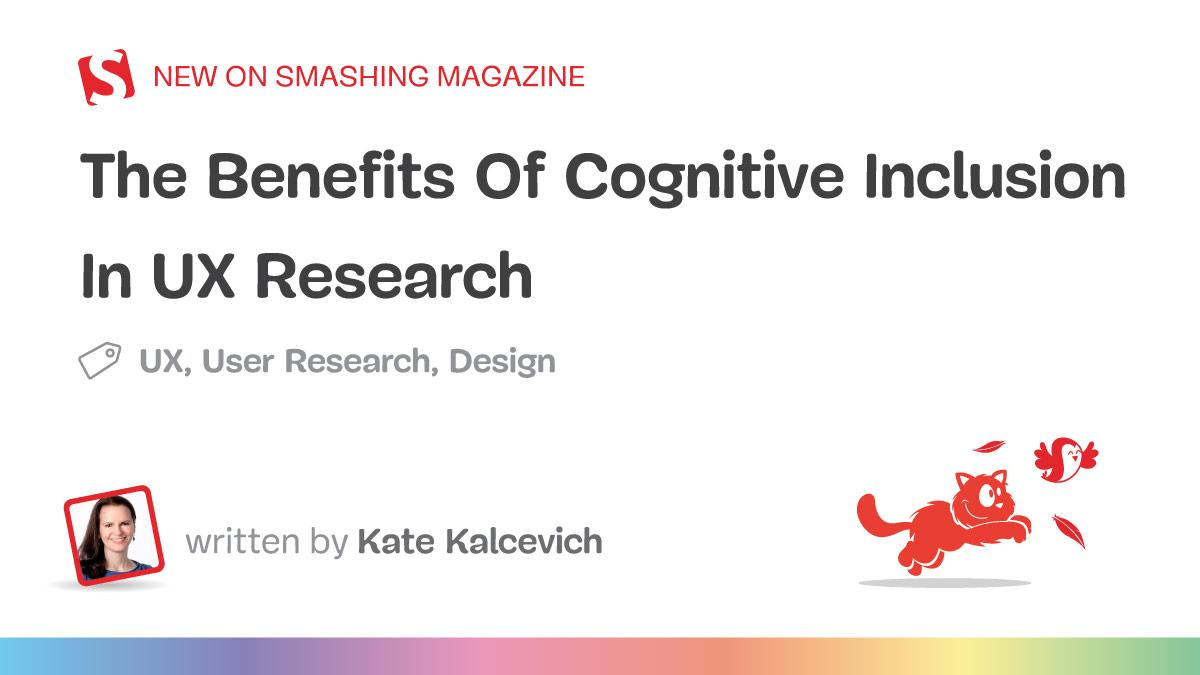
A controlled study conducted at UC Irvine tested 30 participants — evenly split between cognitive (self-identified challenges with memory, focus, and learning) and general population — across three AI-generated websites spanning e-commerce, booking, and recipe browsing. Cognitive participants surfaced 197 usability issues versus 113 from gen pop, and made 93 improvement suggestions versus 54 — a consistent 1.8x ratio. They flagged significantly more issues in content clarity, button/link affordances, icon meaning, and media distraction. Qualitative findings showed cognitive participants provided richer explanations, often articulating the emotional toll — feeling drained, unable to focus — beyond mere task frustration. The author argues that cognitive inclusion is an accessible on-ramp to broader assistive-technology research, and that the issues surfaced also benefit seniors, Gen Z, and attention-fatigued adults.
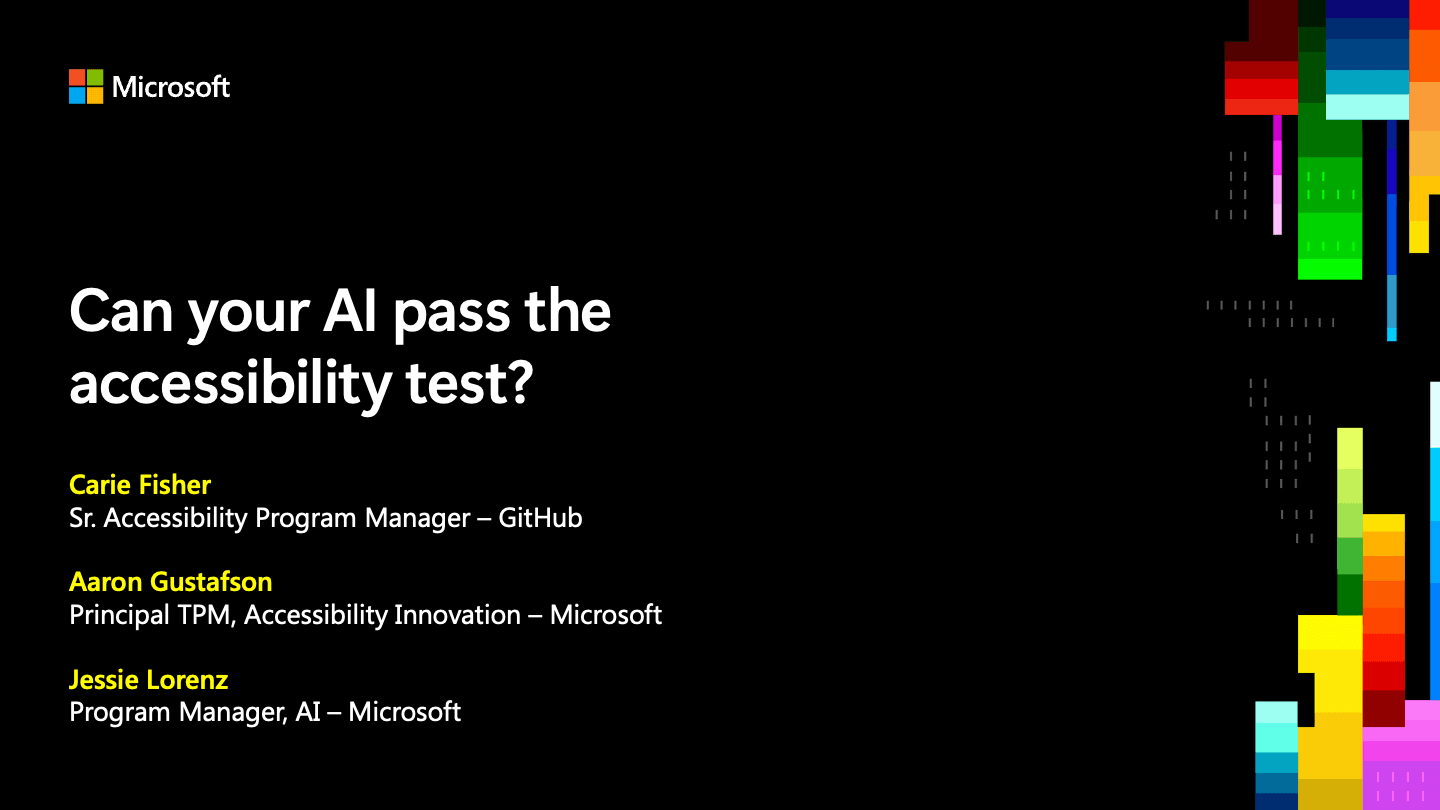
A Microsoft Build talk by Jessie Lorenz (blind PM), Aaron Gustafson, and Carie Fisher (GitHub) covers how to embed accessibility across every stage of a six-step software pipeline. Key data points: fixing accessibility at planning costs nothing; at design it is 10x more; at development 100x; post-release 1000x. Out of the box, coding agents pass only 8–25% of automatable accessibility checks; instruction files push that to 37–60%; adding skills brings it to ~86%; but only deterministic tests with explicit run instructions achieve near-100% on automatable checks — which themselves only cover ~50% of true accessibility. The Figma Accessibility Assistant plugin is highlighted for generating exportable a11y specs for agentic handoffs, while GitHub's open-source Accessibility Scanner (powered by Deque's aXe ruleset) closes the loop with a Find-File-Fix workflow inside pull requests and CI/CD pipelines.
What Our Design Team Stopped Doing to Start Leading the System for Quality
Auth0's design team describes a shift away from manual screen production and exhaustive spec documents — tasks they now call low-leverage — toward systemic quality ownership. The trigger was a backlog of 350+ polish tickets aging over a year, which they resolved by empowering designers to commit fixes directly to the codebase rather than writing more tickets. They stopped acting as research librarians (AI-powered knowledge tools now surface past insights instantly) and cut non-essential meetings in favor of async updates. In return, the team gained the capacity to own the full customer journey beyond the UI, define and measure what "good" looks like org-wide, and treat the shared design system as the living spec — making the design-to-engineering translation layer effectively obsolete.
Unlike deterministic software where specs map directly to code, generative AI systems are nondeterministic — the same prompt can yield different outputs, making traditional Figma-spec handoffs insufficient. The author proposes a judge-evaluate-iterate loop: designers define objective judging criteria (what good looks like for a given context, e.g., verbosity rules per conversation type), evaluate model outputs manually or via an LLM-as-judge approach targeting F1 scores above 0.8, then use failing examples to improve prompt engineering or to fine-tune the model with curated good/bad response pairs. Crucially, regression monitoring is essential because unrelated prompt or training-data changes can break previously passing criteria. The framework reframes the designer's role from specifying exact behaviors to authoring shared definitions of quality that engineering and data-science partners can operationalize.
Design in the Real Codebase: No Handoff, No Prototype — Builder.io
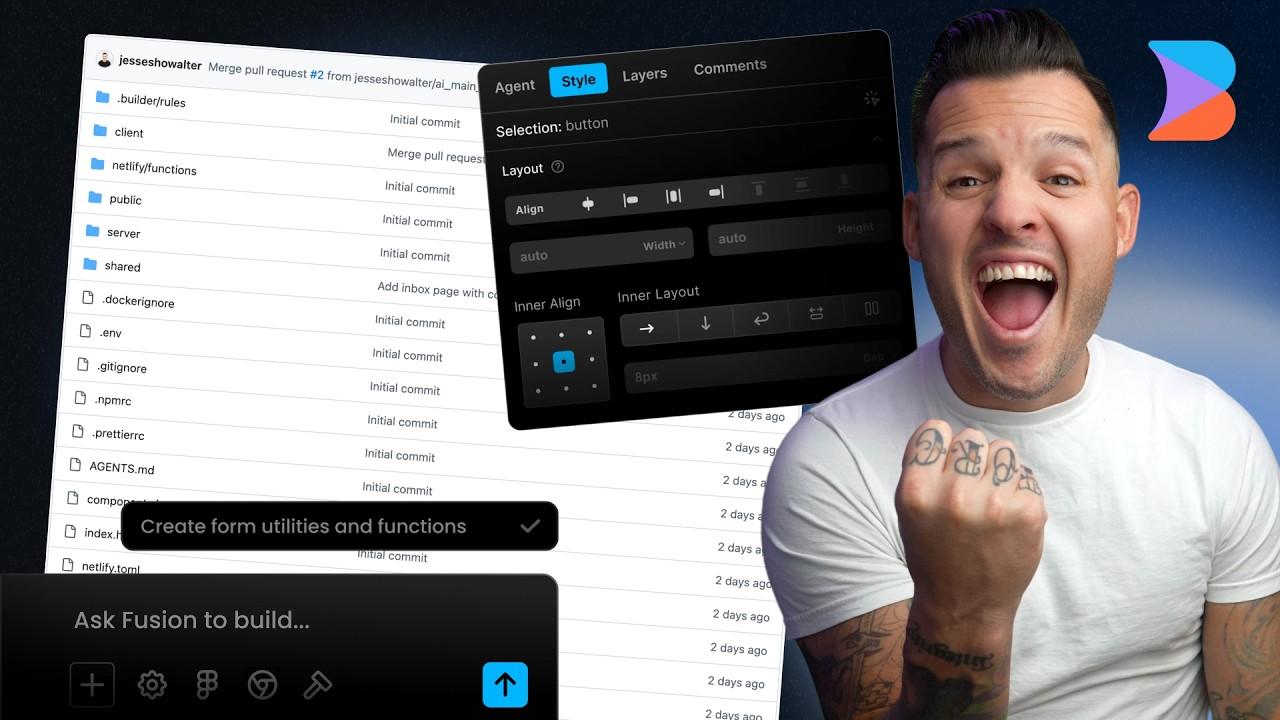
Jesse Showalter walks through Builder.io's GitHub-connected workflow that lets designers push real code changes without traditional handoff documents. After connecting a repository, designers can create branches, make visual edits (layout, typography, CSS properties, color tokens), and submit pull requests — all from Builder.io's design canvas. The demo covers parallel branch management via a Kanban view, prompting the AI agent to replace a brand color with Facebook blue across an entire TSX codebase, and using plan mode to scaffold a group-cards grid view with avatar stacks and mock data. The key differentiator Builder.io offers over standard vibe-coding tools is that it operates directly on the production repository, so merged PRs update the main branch immediately — closing the design-to-engineering gap without replacing the development team.
France's Major Court Decision Supporting Digital Accessibility Under the EAA
A French court (Tribunal judiciaire de Caen) ordered Carrefour to make its e-commerce platform fully accessible within six months, with daily fines for non-compliance — the first significant EAA enforcement action. Separately, the Fédération des Aveugles et Amblyopes de France filed a class-action suit citing Article 47 of France's 2005 disability law and the RGAA standard. A parallel case against Auchan E-Commerce was dismissed in Lille but is being appealed, with advocates arguing the court misread both French and European law. Deque notes that civil organizations are bypassing regulators and going directly to courts, signaling that EAA legal risk has moved from theory to active enforcement across the EU.
Design in the Real Codebase: No Handoff, No Prototype — Builder.io
Jesse Showalter walks through Builder.io's GitHub-connected workflow that lets designers push real code changes without traditional handoff documents. After connecting a repository, designers can create branches, make visual edits (layout, typography, CSS properties, color tokens), and submit pull requests — all from Builder.io's design canvas. The demo covers parallel branch management via a Kanban view, prompting the AI agent to replace a brand color with Facebook blue across an entire TSX codebase, and using plan mode to scaffold a group-cards grid view with avatar stacks and mock data. The key differentiator Builder.io offers over standard vibe-coding tools is that it operates directly on the production repository, so merged PRs update the main branch immediately — closing the design-to-engineering gap without replacing the development team.
Why the Digital Accessibility Community Should Embrace EN 17161
WCAG has served as the global benchmark for digital accessibility for nearly three decades, but its nature as an output standard creates structural gaps: requirements must be universal and objectively testable, leaving out use cases like classroom sign language or content comprehensibility for specific audiences. EN 17161 (Design for All) is an Integrated Management System standard — similar in structure to ISO 9001 or ISO 27001 — that focuses on organizational processes rather than per-page checklists. It requires leadership commitment, direct or indirect user involvement, and embedding accessibility across the full product lifecycle. The author argues that pairing EN 17161 with the forthcoming WCAG 3.0 assertions model would make those assertions far more verifiable and auditable, offering a holistic alternative to the current all-or-nothing compliance paradigm.
The Benefits of Cognitive Inclusion in UX Research
A controlled study conducted at UC Irvine tested 30 participants — evenly split between cognitive (self-identified challenges with memory, focus, and learning) and general population — across three AI-generated websites spanning e-commerce, booking, and recipe browsing. Cognitive participants surfaced 197 usability issues versus 113 from gen pop, and made 93 improvement suggestions versus 54 — a consistent 1.8x ratio. They flagged significantly more issues in content clarity, button/link affordances, icon meaning, and media distraction. Qualitative findings showed cognitive participants provided richer explanations, often articulating the emotional toll — feeling drained, unable to focus — beyond mere task frustration. The author argues that cognitive inclusion is an accessible on-ramp to broader assistive-technology research, and that the issues surfaced also benefit seniors, Gen Z, and attention-fatigued adults.
A Microsoft Build talk by Jessie Lorenz (blind PM), Aaron Gustafson, and Carie Fisher (GitHub) covers how to embed accessibility across every stage of a six-step software pipeline. Key data points: fixing accessibility at planning costs nothing; at design it is 10x more; at development 100x; post-release 1000x. Out of the box, coding agents pass only 8–25% of automatable accessibility checks; instruction files push that to 37–60%; adding skills brings it to ~86%; but only deterministic tests with explicit run instructions achieve near-100% on automatable checks — which themselves only cover ~50% of true accessibility. The Figma Accessibility Assistant plugin is highlighted for generating exportable a11y specs for agentic handoffs, while GitHub's open-source Accessibility Scanner (powered by Deque's aXe ruleset) closes the loop with a Find-File-Fix workflow inside pull requests and CI/CD pipelines.
What Our Design Team Stopped Doing to Start Leading the System for Quality
Auth0's design team describes a shift away from manual screen production and exhaustive spec documents — tasks they now call low-leverage — toward systemic quality ownership. The trigger was a backlog of 350+ polish tickets aging over a year, which they resolved by empowering designers to commit fixes directly to the codebase rather than writing more tickets. They stopped acting as research librarians (AI-powered knowledge tools now surface past insights instantly) and cut non-essential meetings in favor of async updates. In return, the team gained the capacity to own the full customer journey beyond the UI, define and measure what "good" looks like org-wide, and treat the shared design system as the living spec — making the design-to-engineering translation layer effectively obsolete.
Unlike deterministic software where specs map directly to code, generative AI systems are nondeterministic — the same prompt can yield different outputs, making traditional Figma-spec handoffs insufficient. The author proposes a judge-evaluate-iterate loop: designers define objective judging criteria (what good looks like for a given context, e.g., verbosity rules per conversation type), evaluate model outputs manually or via an LLM-as-judge approach targeting F1 scores above 0.8, then use failing examples to improve prompt engineering or to fine-tune the model with curated good/bad response pairs. Crucially, regression monitoring is essential because unrelated prompt or training-data changes can break previously passing criteria. The framework reframes the designer's role from specifying exact behaviors to authoring shared definitions of quality that engineering and data-science partners can operationalize.
This week's design systems coverage converged on two themes: AI-era legal risk in digital accessibility, and the organizational shift away from traditional design handoff workflows. A French court (Tribunal judiciaire de Caen) ordered Carrefour to make its e-commerce platform fully RGAA-compliant within six months — the first significant European Accessibility Act enforcement action — while a class-action suit by the Fédération des Aveugles et Amblyopes de France signals civil organizations are bypassing regulators and going directly to courts. A parallel piece argued that EN 17161 (Design for All), an integrated management system standard analogous to ISO 9001, should complement WCAG by embedding accessibility into organizational processes rather than page-by-page checklists.
On the research and tooling side, a UC Irvine controlled study found that cognitively diverse participants surfaced 1.8x more usability issues than the general population — a strong case for cognitive inclusion in UX research. A Nielsen Norman Group piece reframed the designer's role in AI systems: rather than spec-driven handoffs, designers must author judging criteria, run LLM-as-judge evaluations targeting F1 scores above 0.8, and maintain regression monitoring as prompts and training data evolve. A Microsoft Build session quantified accessibility debt: coding agents with no configuration pass only 8–25% of automatable checks, rising to ~86% with skills — but automated checks themselves cover only ~50% of true accessibility.
Auth0's design team shared how they eliminated 350+ polish tickets by empowering designers to commit code directly, while Builder.io's GitHub-connected workflow — demonstrated by Jesse Showalter — showed designers creating branches, editing CSS tokens, and merging pull requests from a visual canvas without traditional handoff documents, treating the production repository as the living design spec.
Key Takeaways
The EAA is moving from theory to active enforcement: a French court ordered Carrefour to achieve full RGAA compliance within six months with daily fines — civil organizations are now litigating directly without waiting for regulators.
Coding agents pass only 8-25% of accessibility checks out of the box; adding instruction files, skills, and deterministic run instructions pushes this to ~86% — but that still only covers half of true accessibility requirements.
Auth0 and Builder.io independently demonstrate the same shift: designers committing code directly and using the shared design system as the living spec, making the traditional design-to-engineering translation layer obsolete.