Weekly Digest // DESIGN_SYSTEMS — Week 34-2026
architectureWeekly Report

Axe-core Passes Five Billion Downloads — Week 34 Design Systems

Five billion axe-core downloads and two token-layer case studies show why design systems need operational support and boundary-aware customization.

calendar_todaysummarizeWeek 34-2026
Axe-core at 5 billion: Accessibility meets the moment - Deque
TAG: ACCESSIBILITYREAD_TIME: 4_MIN

Axe-core at 5 billion: Accessibility meets the moment - Deque

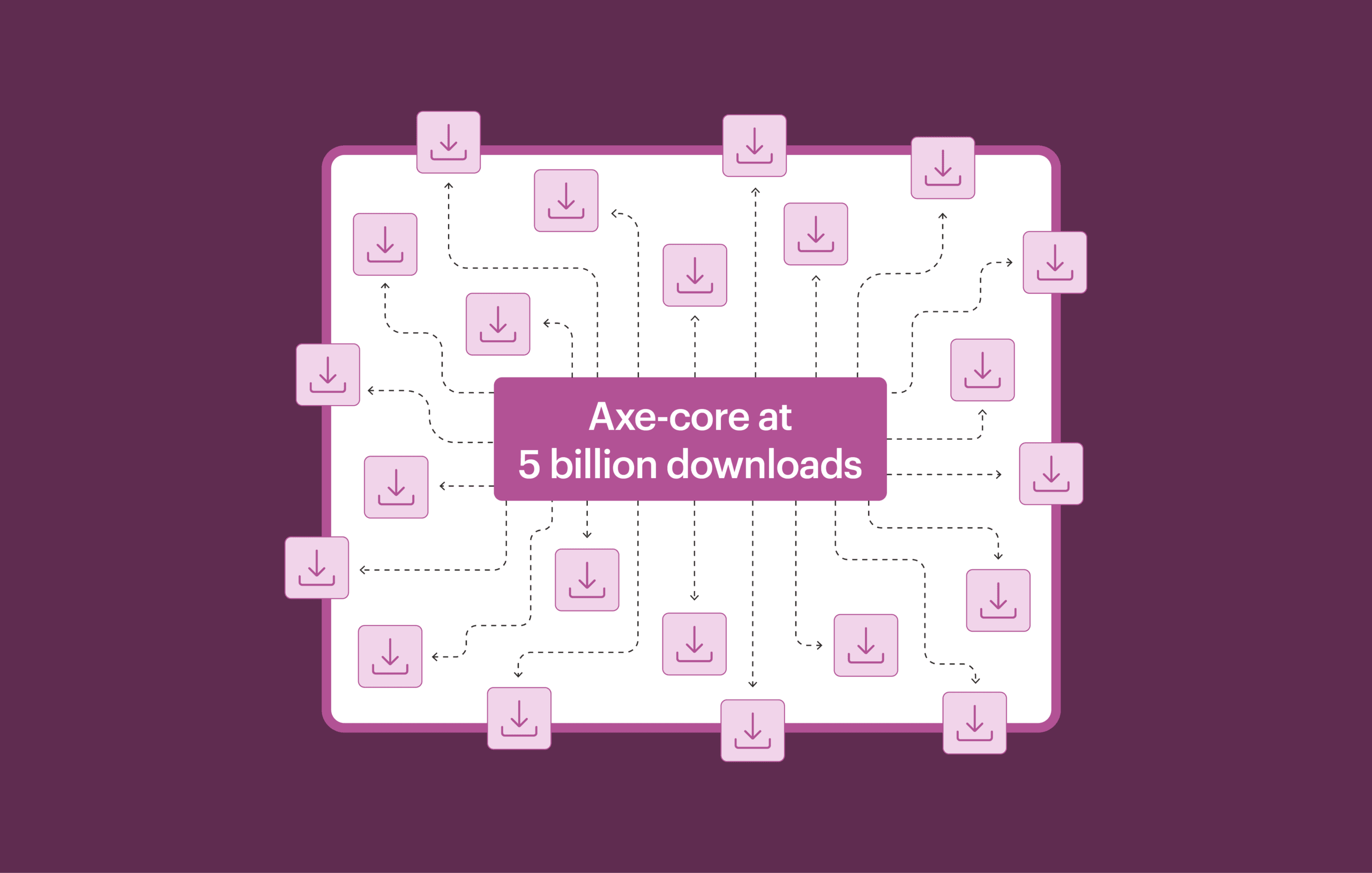
Axe-core has exceeded 5 billion downloads, up from 3 billion only a year earlier. Deque now records nearly 10 million downloads per day, more than triple the prior year's pace. The increase arrives as accessibility requirements become more operational across the European Union, Canada, Australia, India, and South Korea. Open-source automation can move a common baseline into every build, but it does not evaluate the full keyboard, screen-reader, content, or task experience. Teams should use the milestone as evidence that accessibility testing belongs in infrastructure while preserving expert review for everything rules cannot see.

TAG: OPERATING MODELREAD_TIME: 10_MIN

The Recipe Isn't The Bake - What Design Systems Need Beyond Documentation

A design-system site can document tokens, components, and patterns perfectly while two product teams still ship different outcomes. Deadlines, legacy code, missing states, accessibility skill, and local product decisions determine how a recipe survives contact with real work. The article makes reviews, pairing, office hours, migration help, and documented exceptions part of the system rather than optional support. AI can accelerate lookup and mechanical comparison, but it cannot absorb the judgment that decides when a component is inappropriate. Maintainers should measure adoption through implementation feedback and make the supported path easier than a quiet fork.

TAG: TOKENSREAD_TIME: 4_MIN

Design Tokens, Web Components, and CSS @layer

CSS layer metadata stored in namespaced design-token extensions can group generated custom properties into predictable cascade layers. Web components reveal the boundary: a document stylesheet cannot establish layer order inside a shadow root, although custom-property values can inherit into it. The revised pattern keeps token data portable, generates layer declarations separately for each tree, and exposes local component variables as the supported override seam. That avoids pretending one global cascade policy can pierce every encapsulation boundary. Token pipelines should therefore transport meaning across environments while emitting environment-specific CSS where the cascade actually exists.

summarizeDigest_Summary

Axe-core has passed 5 billion downloads only a year after reaching 3 billion, and Deque now sees nearly 10 million downloads per day. The growth coincides with more concrete accessibility enforcement across Europe, Canada, Australia, India, and South Korea. Automated testing is becoming infrastructure, but it still detects only part of the experience teams are accountable for.

Documentation has the same limit. Always Twisted argues that a design system is a recipe rather than the finished bake: rules cannot see a team's deadline, legacy code, missing states, or accessibility judgment. Reviews, pairing, office hours, migration guidance, and explicit exceptions are not support around the system; they are part of the system's operating model.

Design-token metadata can encode cascade intent, but shadow DOM exposes where that intent stops. Document-level layer order does not cross into a component's shadow root, even though custom-property values inherit across the boundary. The workable pattern is to transport token meaning, define layer order inside each tree, and keep component variables as the public customization seam.

Key Takeaways
  • Treat automated accessibility checks as a release gate and trend signal, then retain manual keyboard, screen-reader, content, and workflow review for what rules cannot detect.
  • Fund design-system adoption with review and migration capacity; polished documentation alone cannot resolve product context, deadline pressure, or missing implementation judgment.
  • Model every shadow root as its own cascade environment: inherit token values across the boundary, but declare local layer order and supported component variables inside it.